The photo that got me on a watchlist
Last year I travelled to seven countries in the northern hemisphere, mostly in Europe. As far as I know, during that time I managed to avoid being put on a single watchlist.
Then I got back to Melbourne, resumed ordinary life - and within days I’d been placed on a “deal with on sight” watchlist. It all seemed to be connected to one photo that I took.
The offending photo
I arrived back on a Sunday afternoon. The following morning I walked to my local station on my way to work. As always, I saw a few different birds, and one of them was a grey butcherbird:
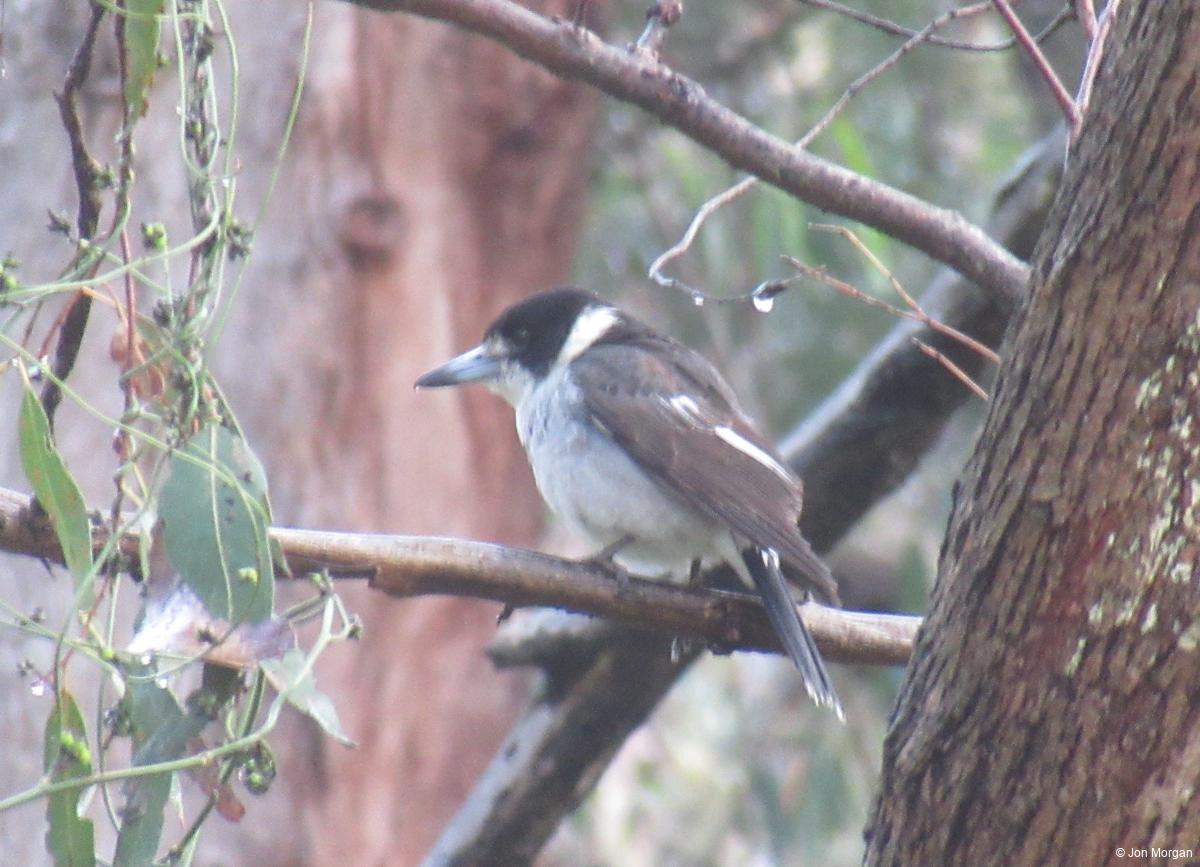
There wasn’t anything particularly unusual about that - I’d probably seen butcherbirds on that route at least a dozen times in the few months before leaving for Europe. But that week I saw the butcherbirds in the same area morning and evening for the rest of the week. So of course I tried to get photos of them each time - just like I would of any other bird.
The following evening I got this picture:
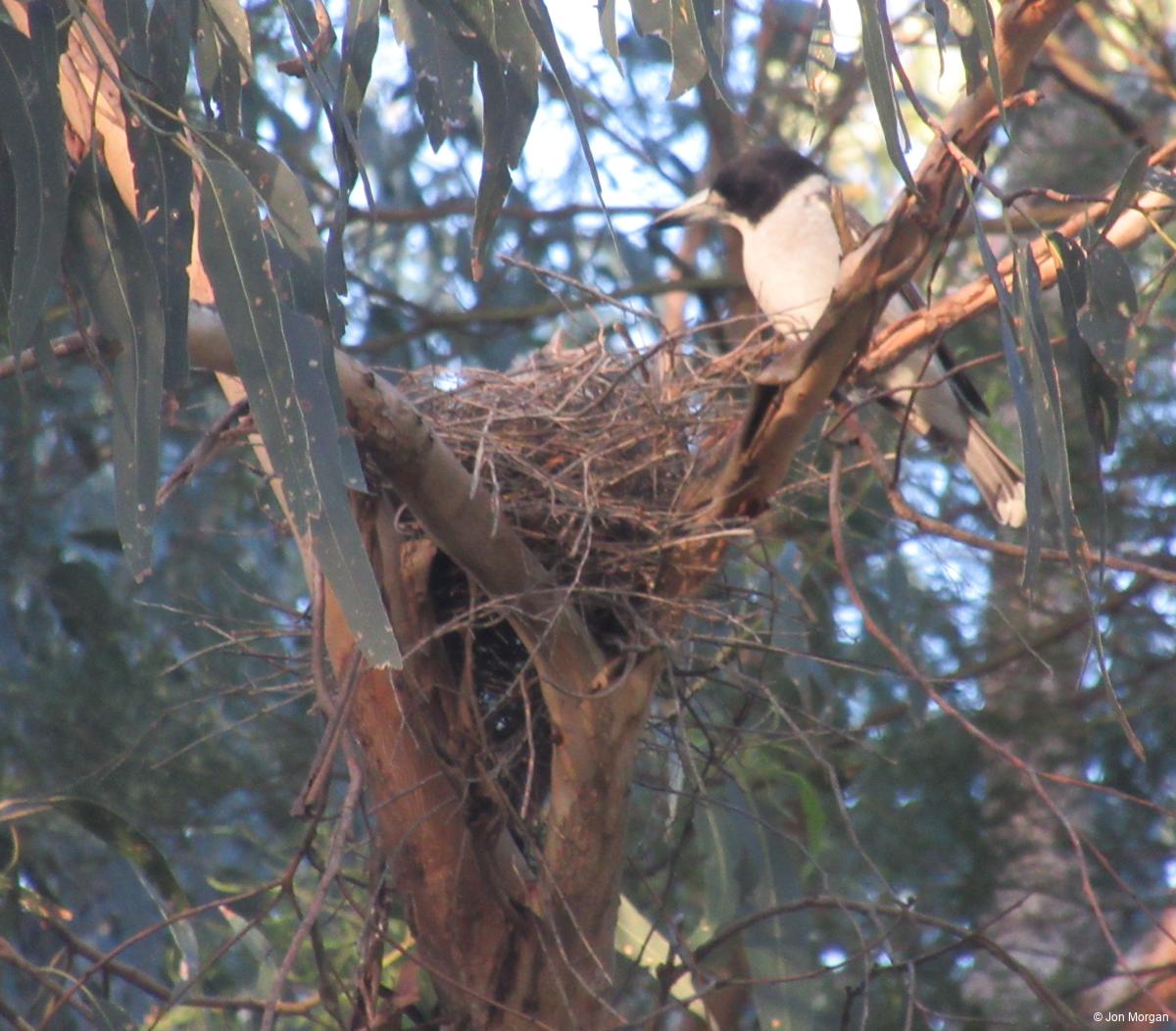
It was after that that things escalated. You see, the nest guardians were actually a couple (I know, surprising how that happens…), and what would happen is that I’d see one of them, try to get pictures of it, and then the other one would attack from behind.
For the purposes of argument, imagine that this is a parent calling for supporting troops to respond to the invasion of privacy:
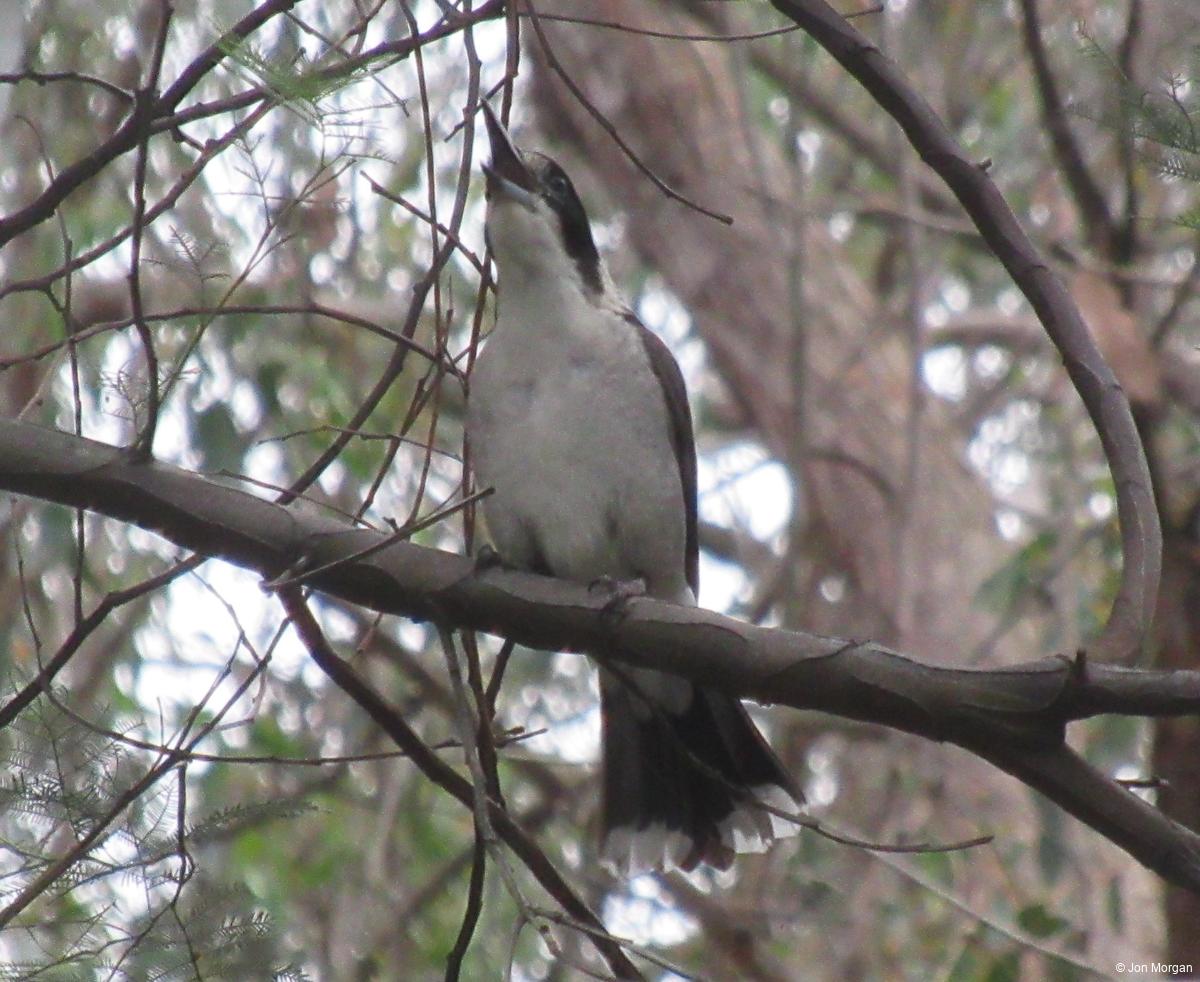
Then sitting looking photogenic to draw my attention away from the arrival of backup:
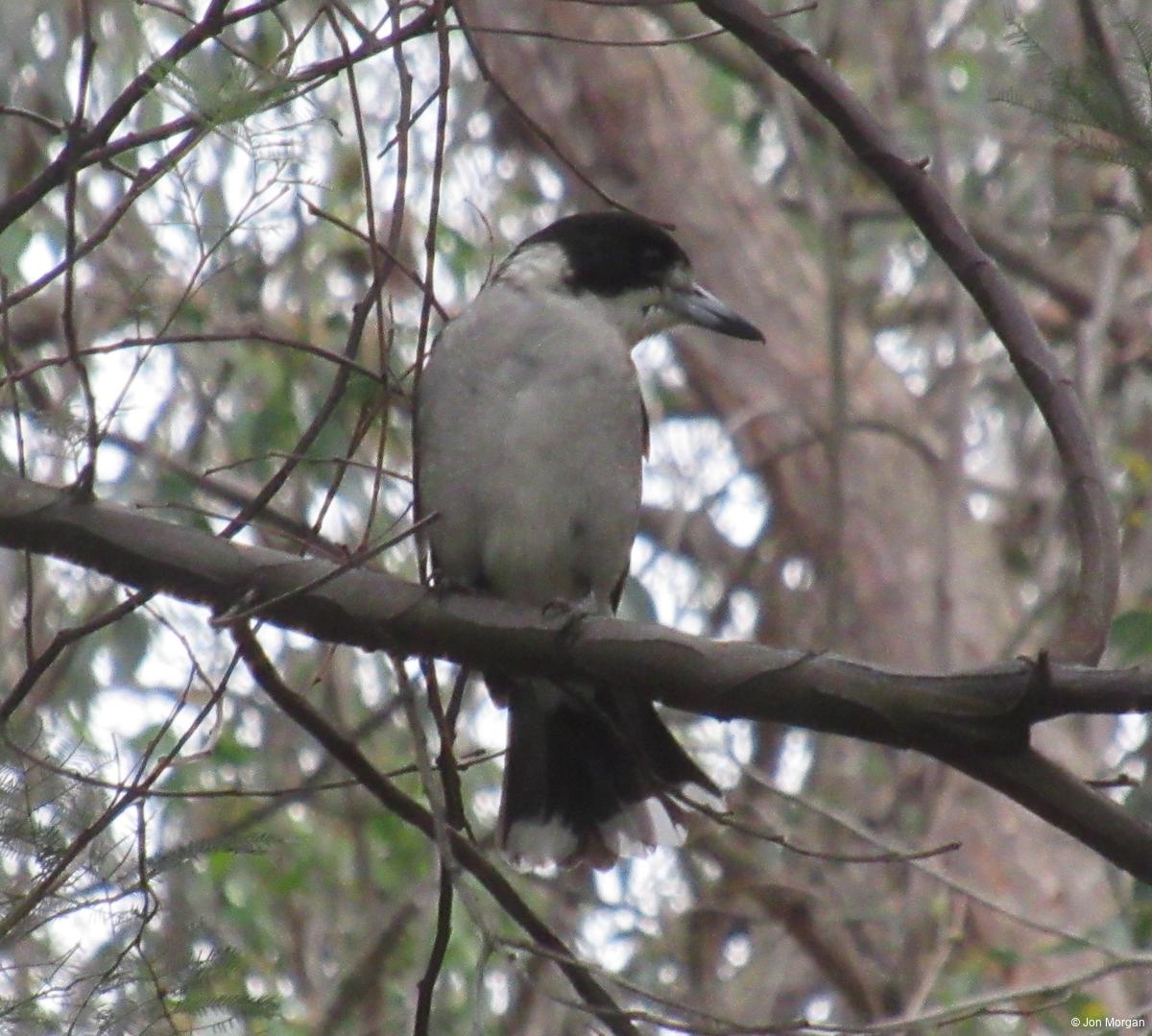
(truth compels me to say that these two photos were actually taken in the morning, some twelve hours before commencement of hostilities - but never let facts get in the way of a good story…).
When I mentioned it to my brother that evening, he said it was well known they were one of the most territorial birds, up there with magpies (who are actually fairly close relatives of theirs).
I didn’t know that. OK, to be fair, I think I’d only really started noticing that grey butcherbirds actually existed earlier that year.
According to Birdlife’s profile:
When a nest or newly fledged chick is around, if you venture too close, a butcherbird will swoop by flying straight at your face, sometimes striking with enough force to draw blood, and each swoop is accompanied by a loud, maniacal cackle.
I’m sure that was a factor, but last year it felt like the pair were specifically targeting me, not just a generic intruder. What had I done to be flagged as “attack on sight”? Reading about it after the fact, I found it was probably more than just “I had entered their territory”.
I’d displayed predator behaviour: I was too interested in watching them, which meant that I was probably searching for their nest.
And of course they were right - I may not have been specifically looking for their nest, but I was interested in it. Just not with any intent of disturbing the younglings, let alone eating them. I also found that they’ve been known to take pieces out of people’s ears, so perhaps I got lucky that the threats stopped at aggressive diving. I didn’t know that either.
I also read that the butcherbirds could recognise faces, and a known predator might be attacked on sight up to five years later. I had no idea I was putting myself on that kind of a watchlist (though, to be fair, none of the butcherbirds that have attacked me this year have been in the same area, so it’s probably just territorial and not due to me being recognised).
A noisy miner meaning business
A couple of years back I was at the Melbourne Botanic Gardens. There were some signs about swooping birds in the area I was walking, but there are often signs about swooping birds. It wasn’t even clear from the signs where I should be avoiding, so I kept walking.
I was innocently watching rainbow lorikeets in a hollow:
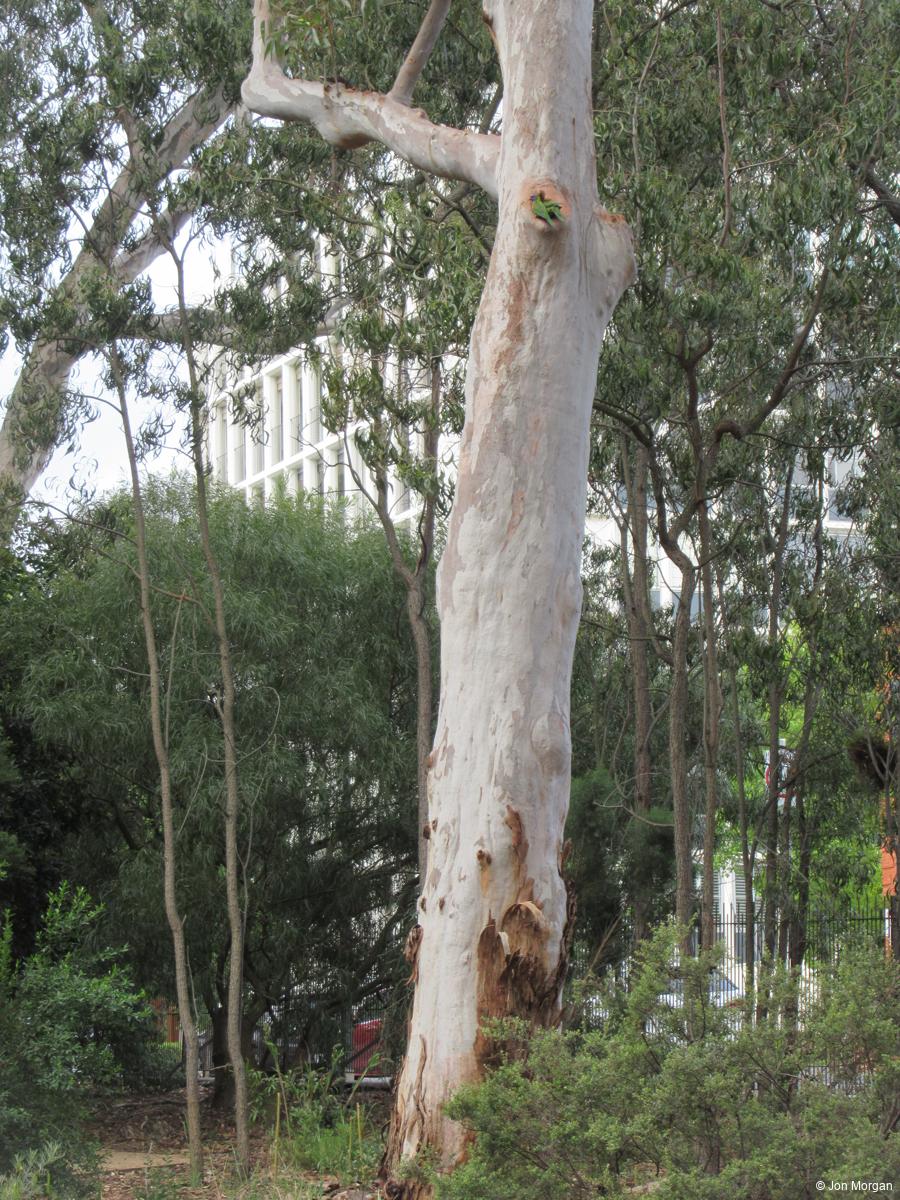
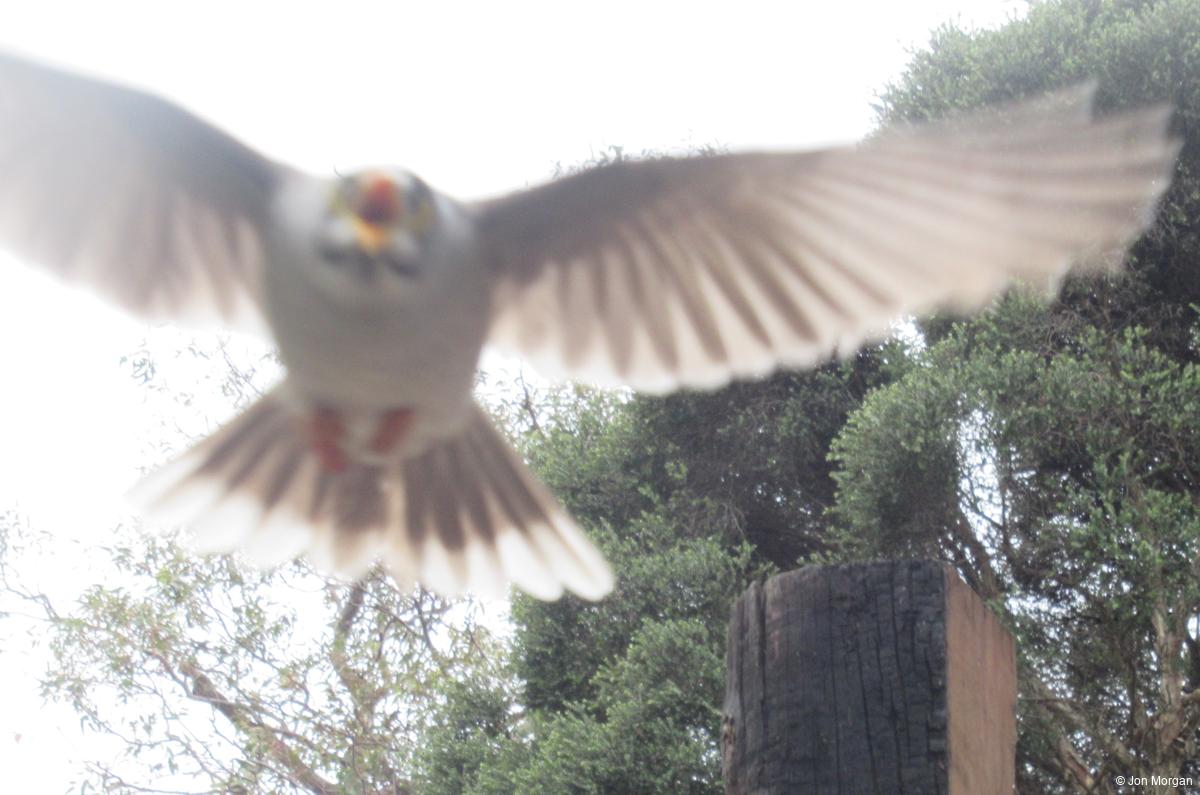
When suddenly a bird went right past my face. I’d never seen a noisy miner act like this before, but it quickly became clear that it meant business:
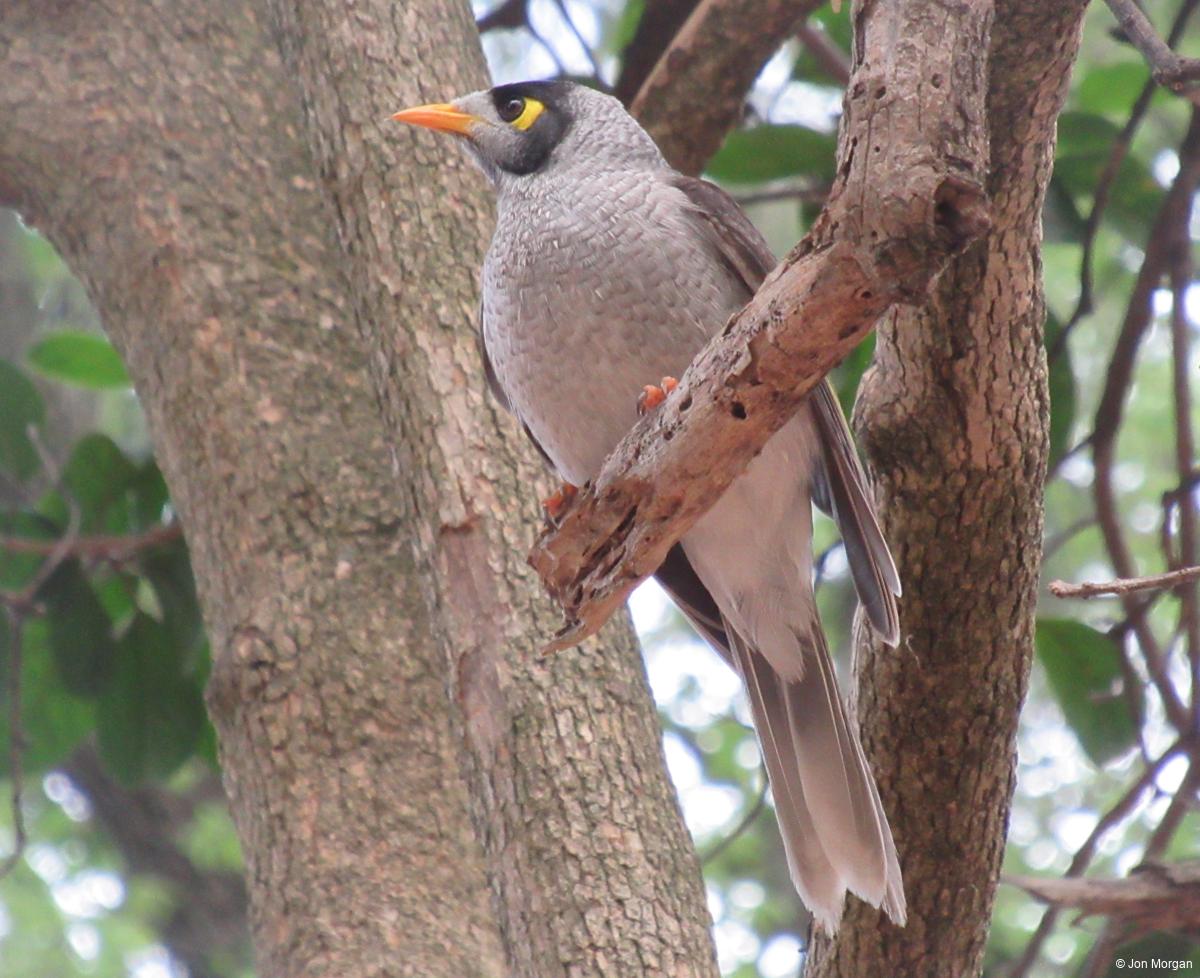
It may well have put an innocent look on its face between dives:
But it made it clear it wasn’t taking no for an answer. I was in its territory, and it wasn’t going to leave until I left.
I also wasn’t going to move without getting the appropriate lorikeet shot - but I was willing to pause to add a few diving noisy miner shots to the collection. The basic process for those was to have my camera focused on the miner, then when I saw it begin the dive take the shot and quickly protect the camera with one hand and my face with the other.
Then I finally got the lorikeet shot I wanted, and was able to move on:
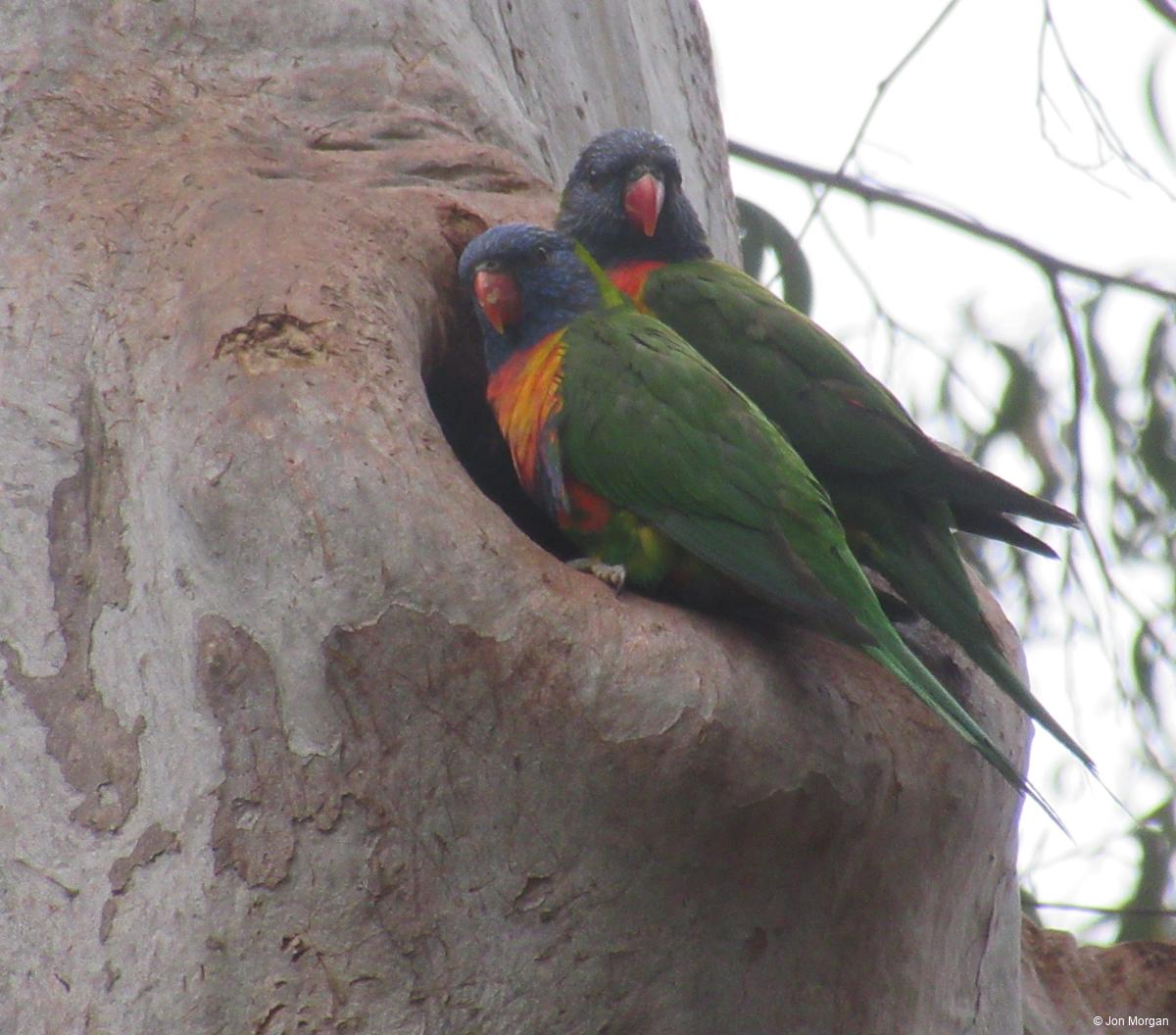
The joke’s on the noisy miner, really - in this case, if I had been predatory, I’d have been targeting their rivals the lorikeets. I had no idea there might have been a noisy miner nest round until it started attacking me (and I didn’t see the nest, so I have no idea how far away it was).
This attack is the most persistent attack I’ve ever faced, even more so than the butcherbird pair I started this post with.
Wood ducks - the ground based assault unit
Up at Marysville in September, I saw my first wood duck duckling for this year. It was very cute, so I stuck round to take photos:
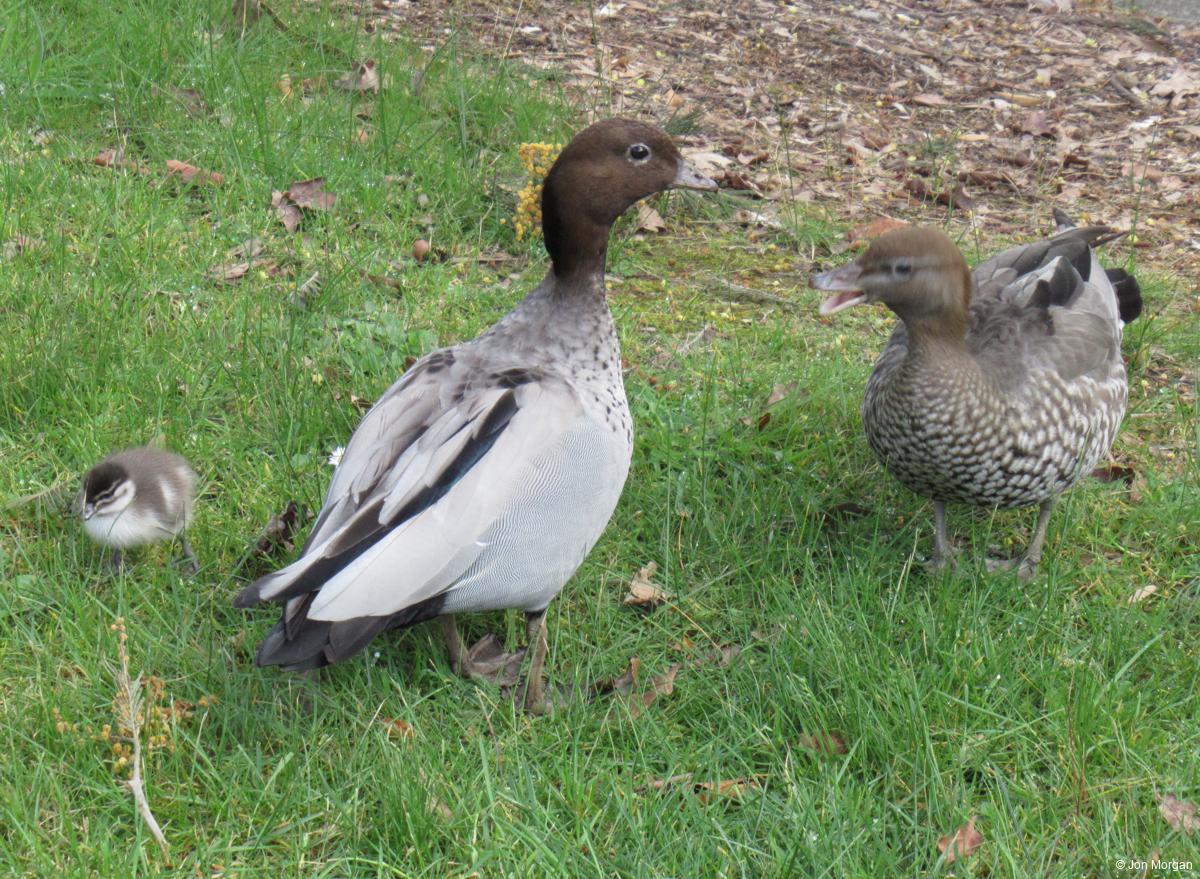
I should note that I didn’t move towards it or threaten it in any way. I stayed in one spot, crouched down, and it was the young duckling that chose to keep walking towards me.
But its parents decided that I was the one who needed to move on, and so the male lowered its head and charged in the usual wood duck way.
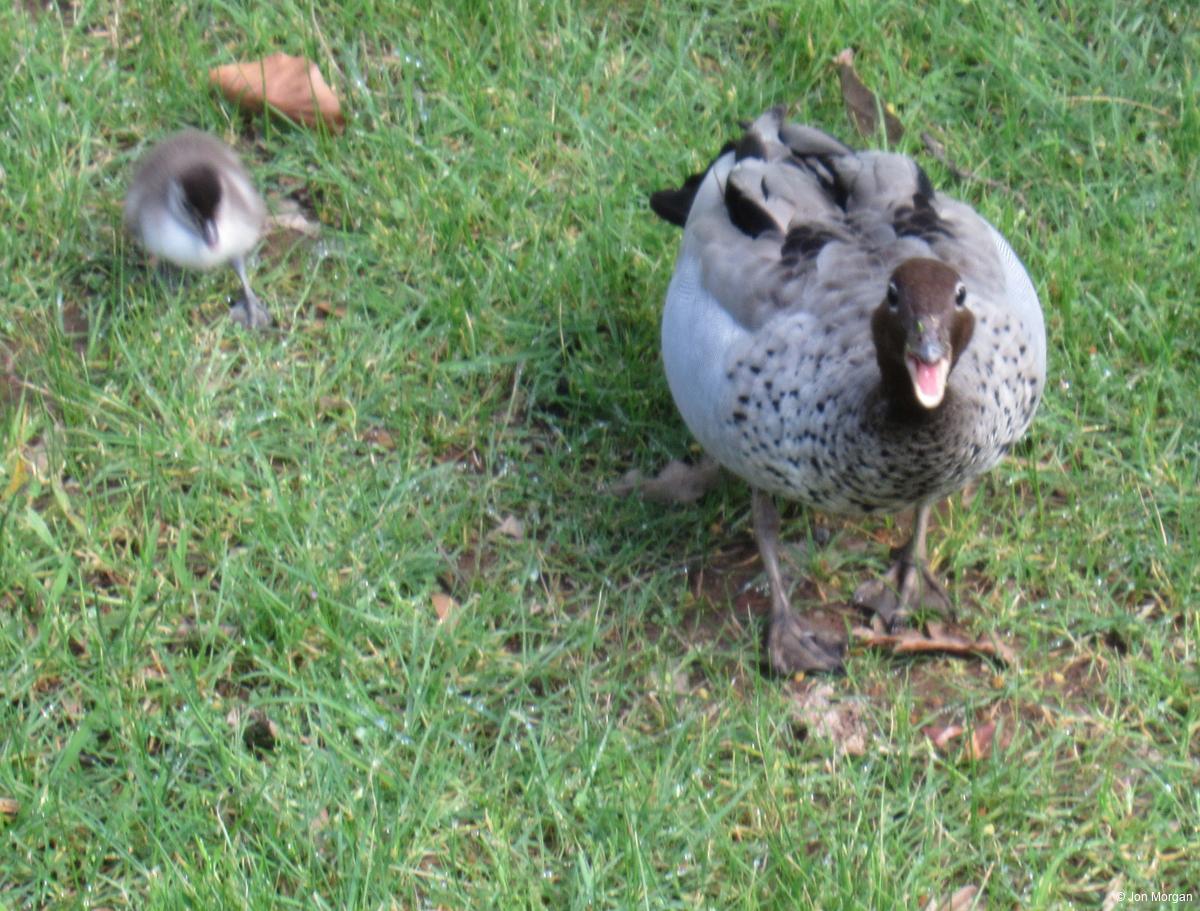
The thing to know with those charges is that if you stand your ground they seem to give up, then quickly decide you’re not a threat so long as you stay still.
An ineffective swooper
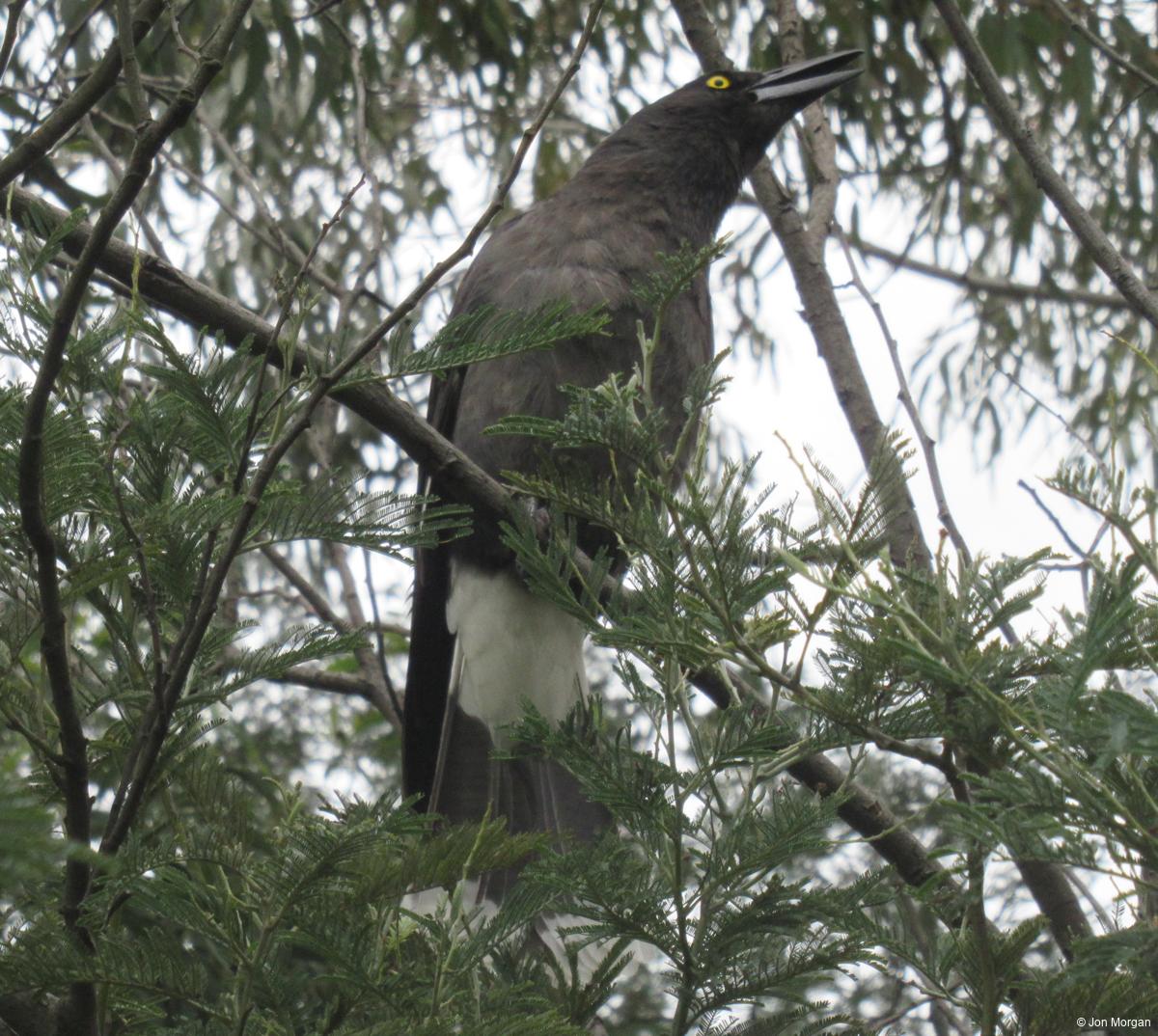
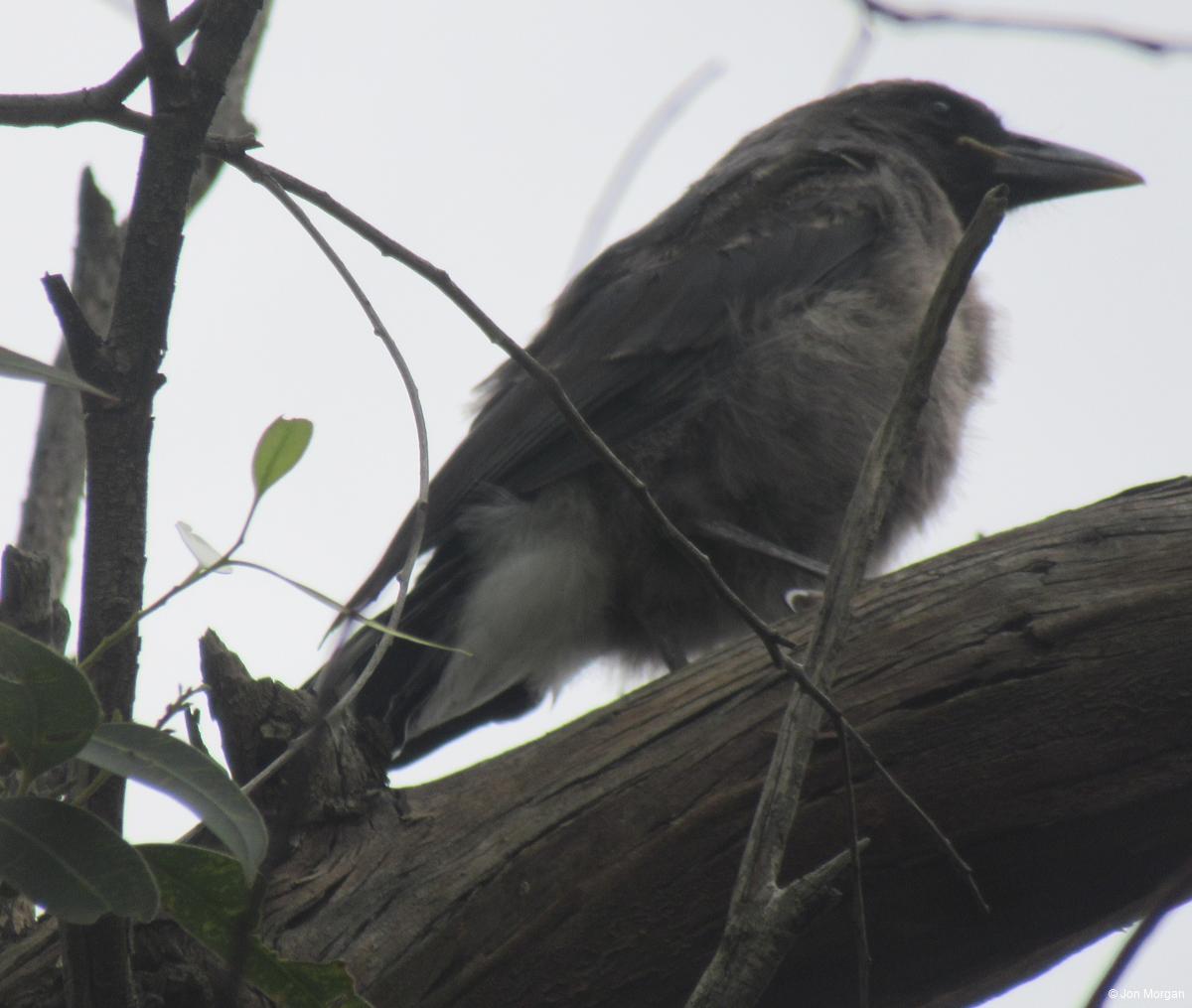
Last year I spent some time watching and photographing a juvenile currawong. Its parents were around, and one must have decided it wanted me gone.
However, while it dived several times, each dive ended up so far away from me that it took a few times for me to even figure out “I think it might be trying to get me to move on”.
Here’s the parent:
While here’s the child that I think it was trying to protect:
And this is the photo that always makes me laugh:
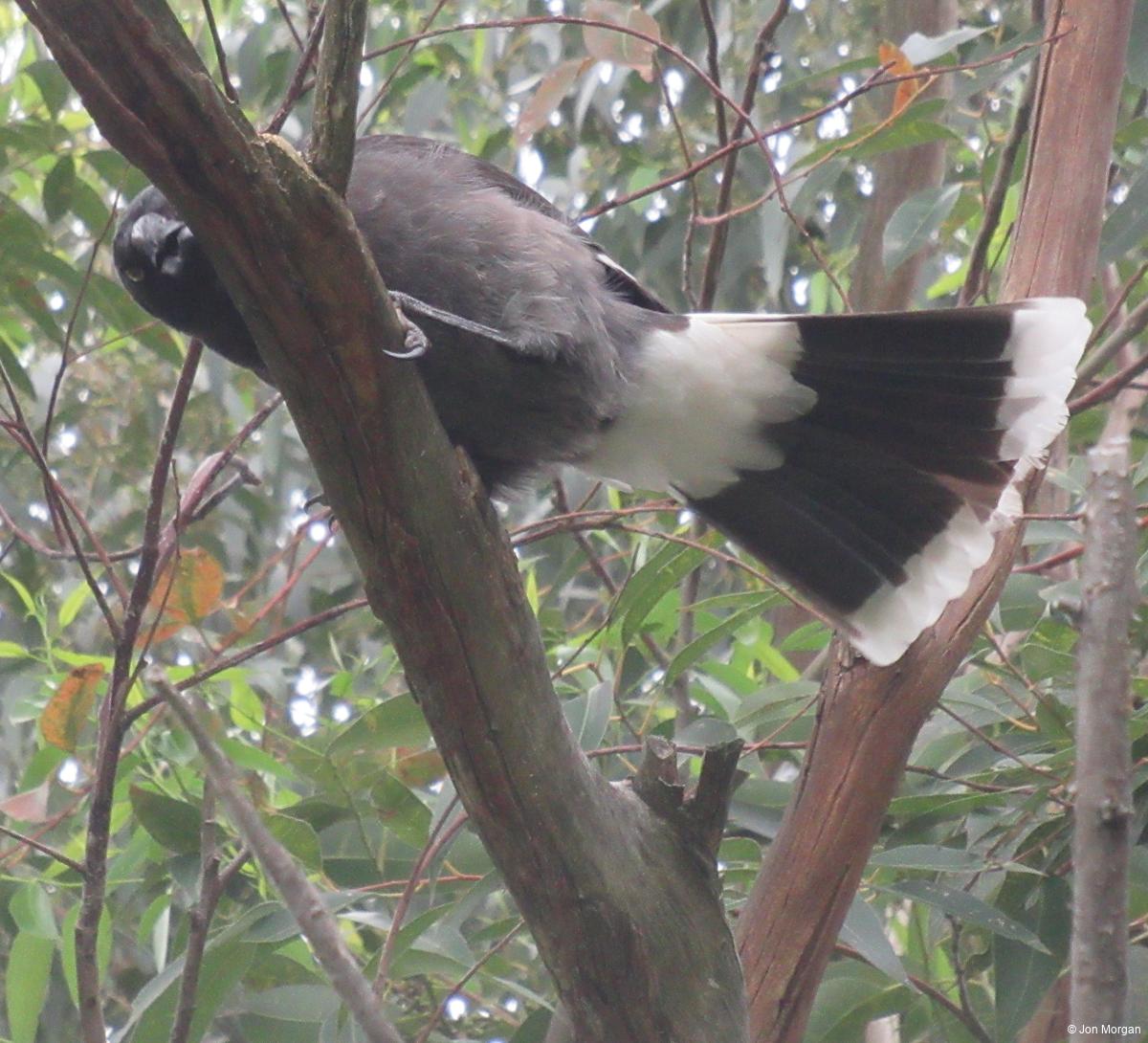
In my head canon it’s peering round the branch after an ineffective dive going “What do you mean, you’re still there? I thought I swooped you good and proper.”
For the record, I’ve seen quite a few juvenile currawongs this year, including a pair of juveniles in exactly the same area as last year. The parents have usually been around, but they’ve never made any attempt to move me on.
Currawongs are in the same subfamily, Cracticinae, as magpies and butcherbirds. But I haven’t noticed them being anywhere near as aggressive, either to humans or to other birds.
What about the magpies?
The Australian bird that is most notorious for swooping is the magpie. It was my top bird observed last year, and probably will be again this year. But I don’t ever recall one swooping me, and certainly not in the last few years. It probably helps that I’m not a cyclist - I think they’re much more likely to be perceived as threats by magpies.
Around the middle of the year a bunch of magpies moved into my area, so I often see them foraging in my garden or in the trees or on the wires outside my property (certainly helps keeping up the observation numbers!). It’s nice - they sing beautifully and don’t otherwise bother me.
Last year I saw a couple of magpie younglings begging for food:
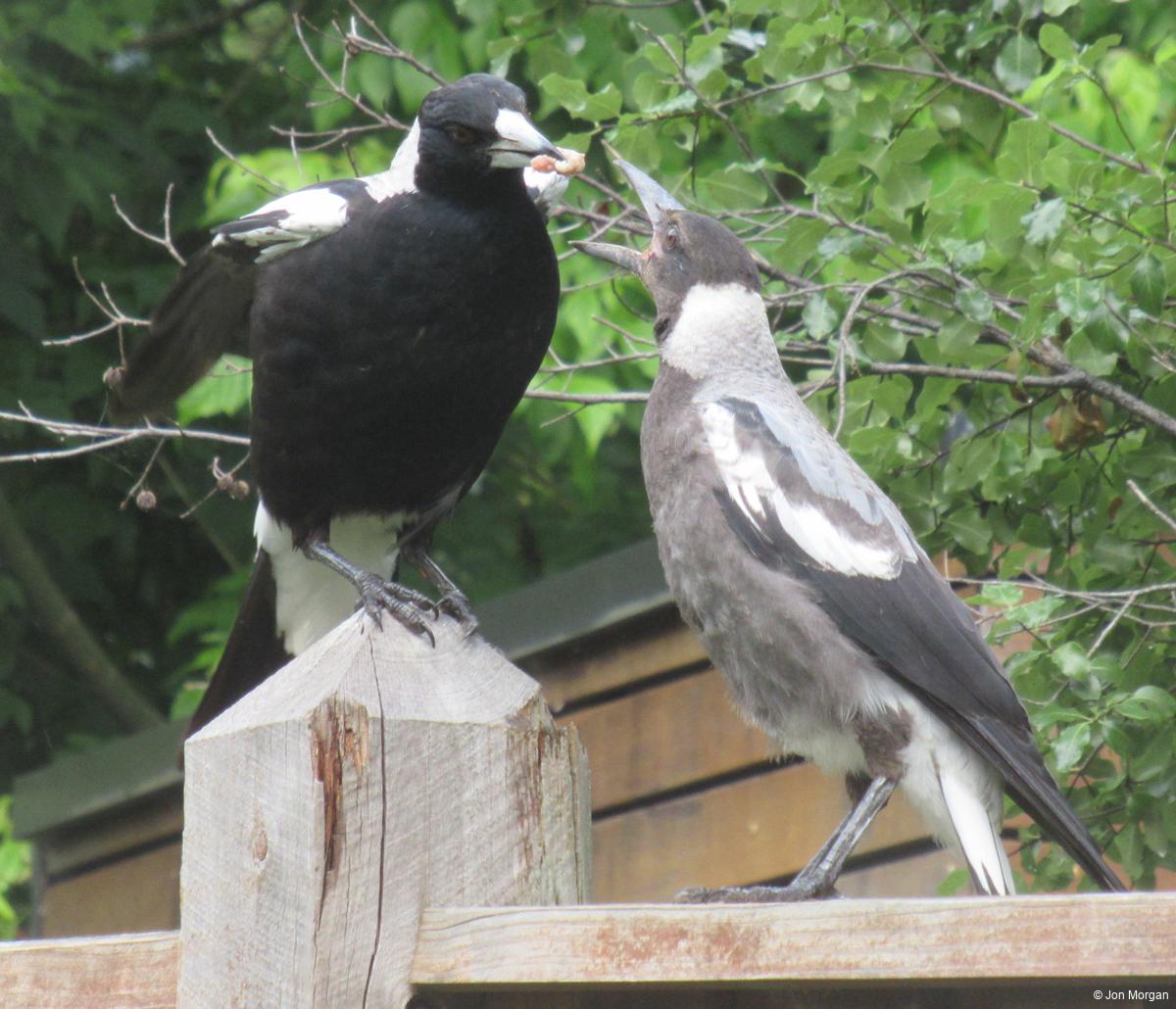
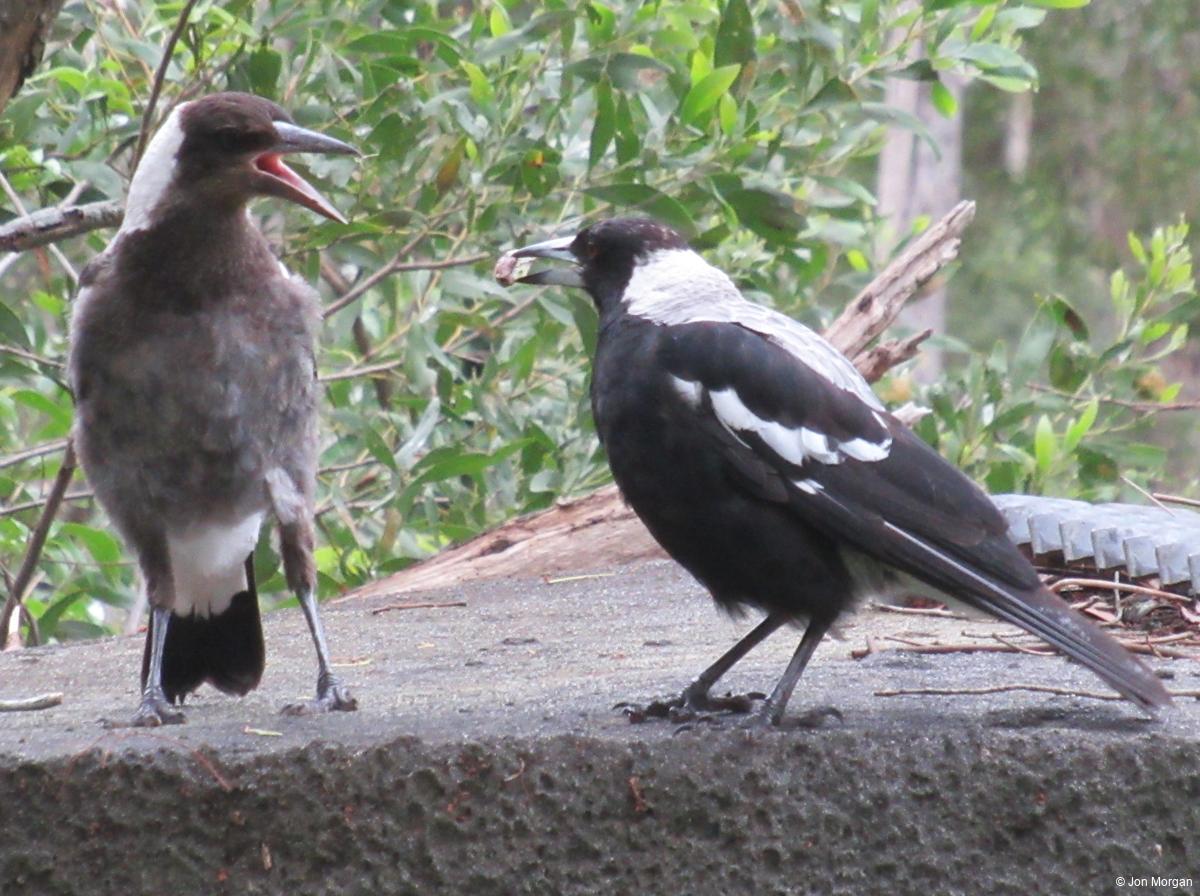
By that stage magpie parents don’t seem too bothered about potential human threats.
I’d probably missed most of the nesting season while I was in Europe. This year I’ve seen several magpies on or near nests, and none of them have appeared at all threatened by me.
Take for example this one. I first saw it collecting food:
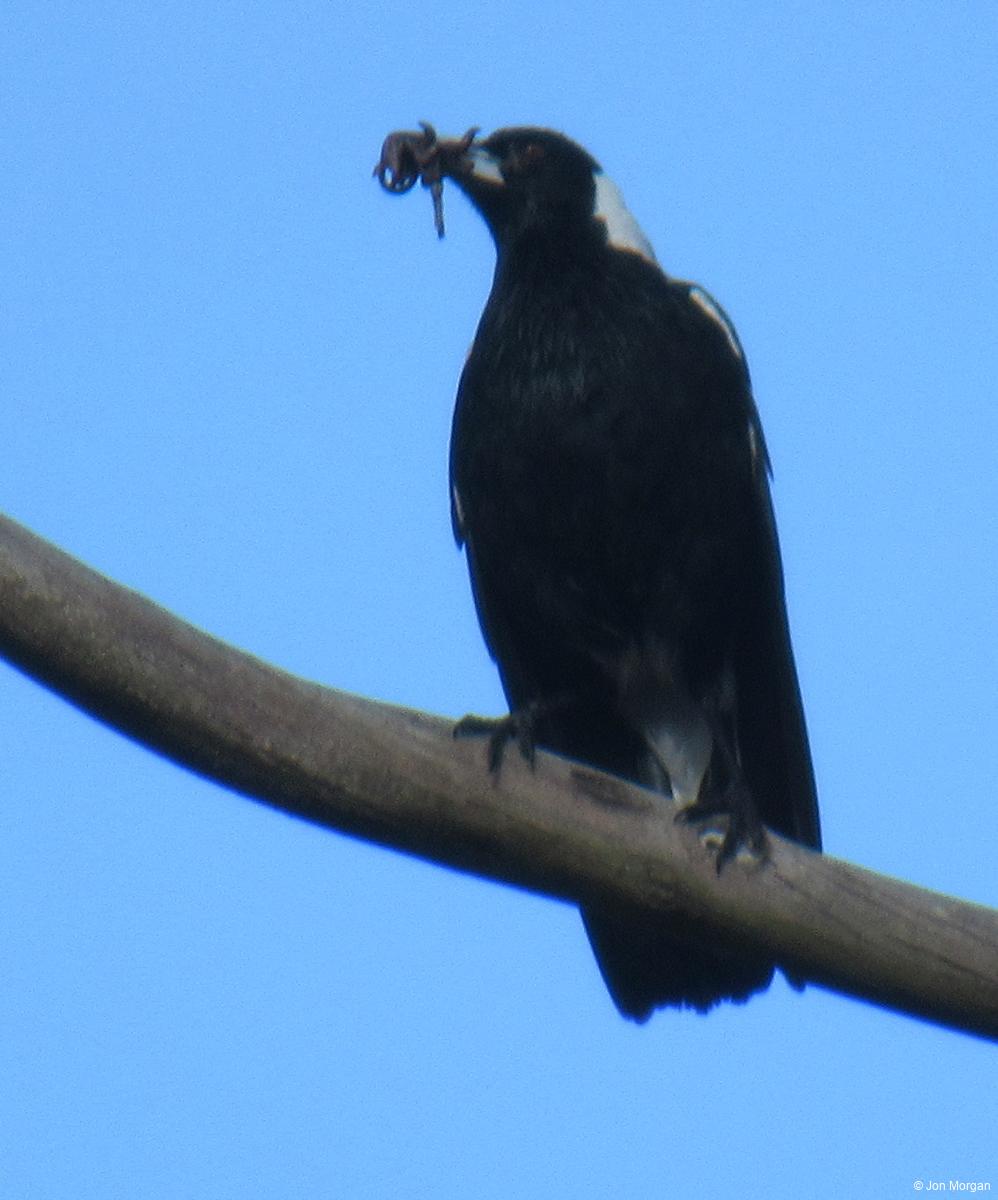
Then when it flew off, I watched where it was going, and sure enough, there was a nest. Look at that young magpie eagerly waiting:
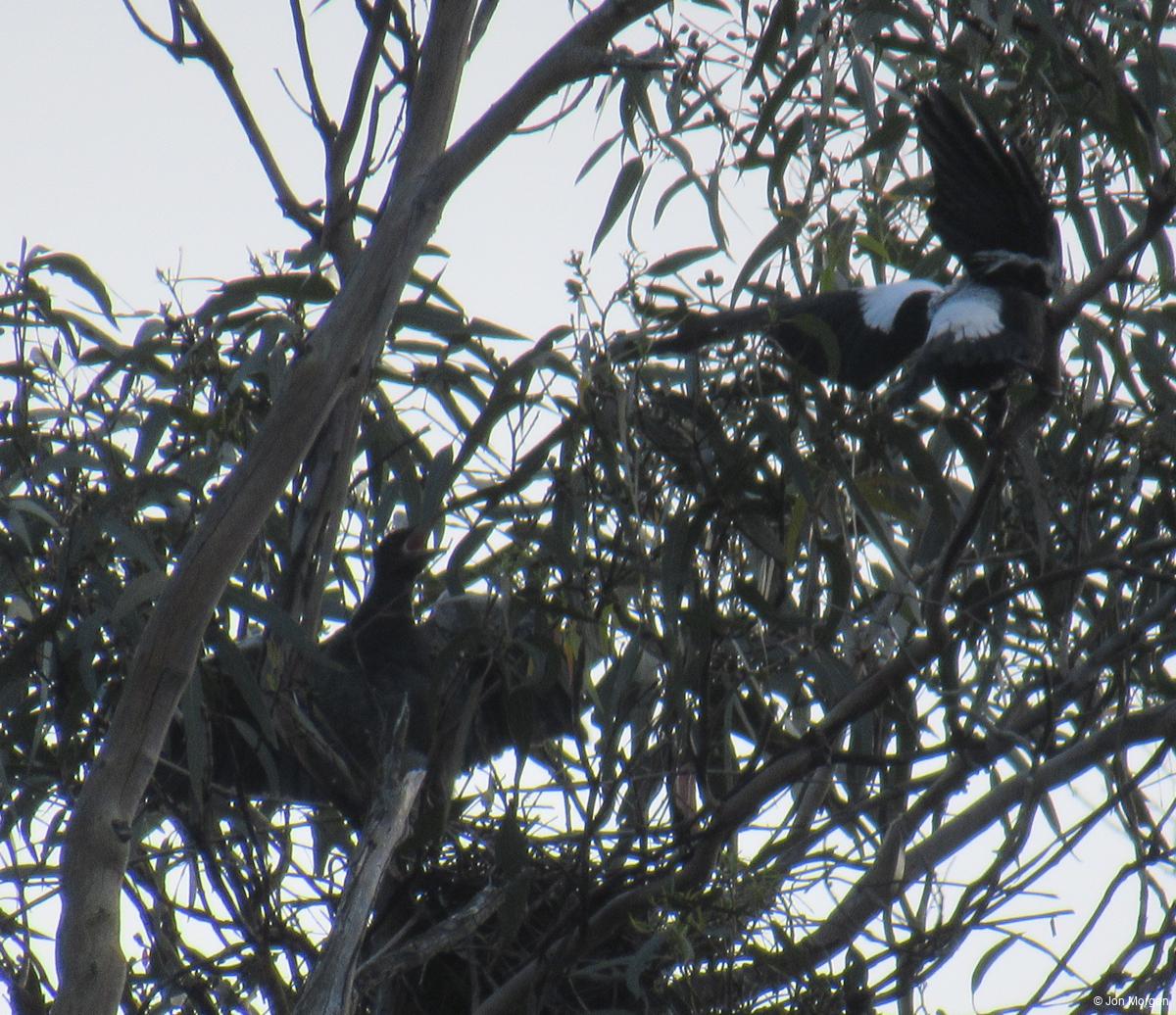
After that, I kept an eye on that nest area when I passed, but never saw an adult near the nest. But a few weeks later, I saw a different nest:
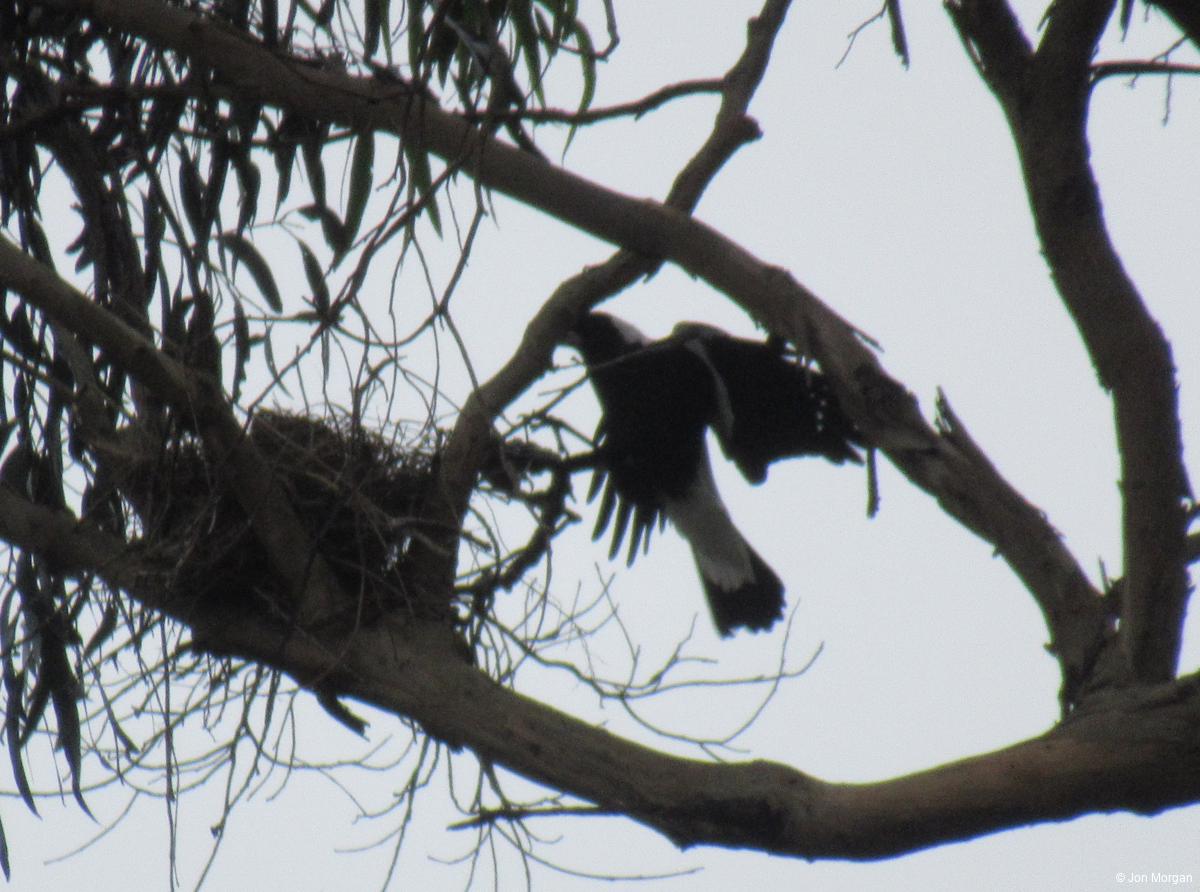
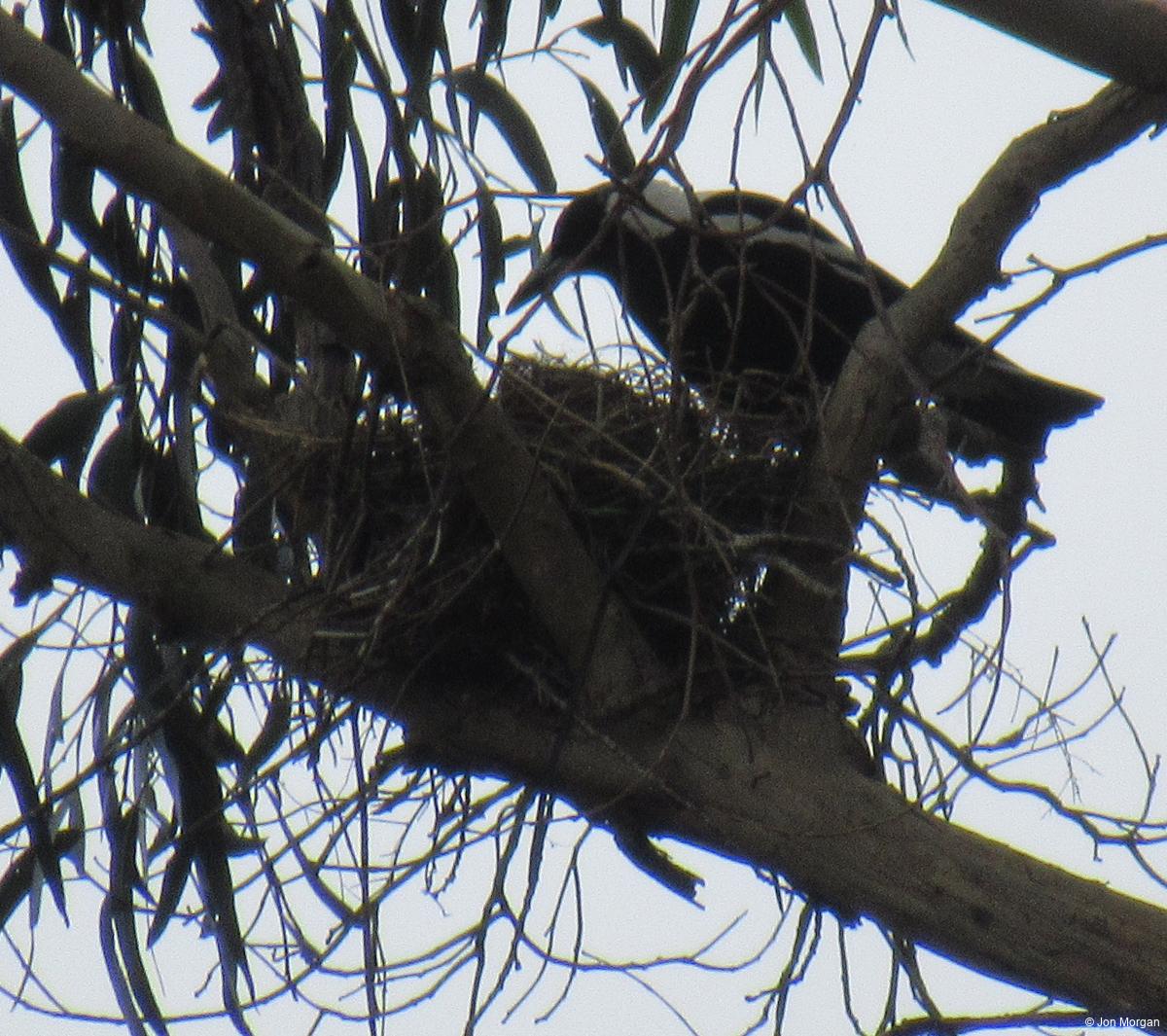
Like the butcherbirds last year, both of those were seen on the way to the station. Nothing special I needed to do - it’s just part of ordinary life.
Noisy miners and magpies banding together
It all started off with me unknowingly passing through noisy miner territory. It was intriguing how precisely defined the territory seemed to be. Put one foot over the invisible line, and the parent would climb as high as it could, then dive down at speed.
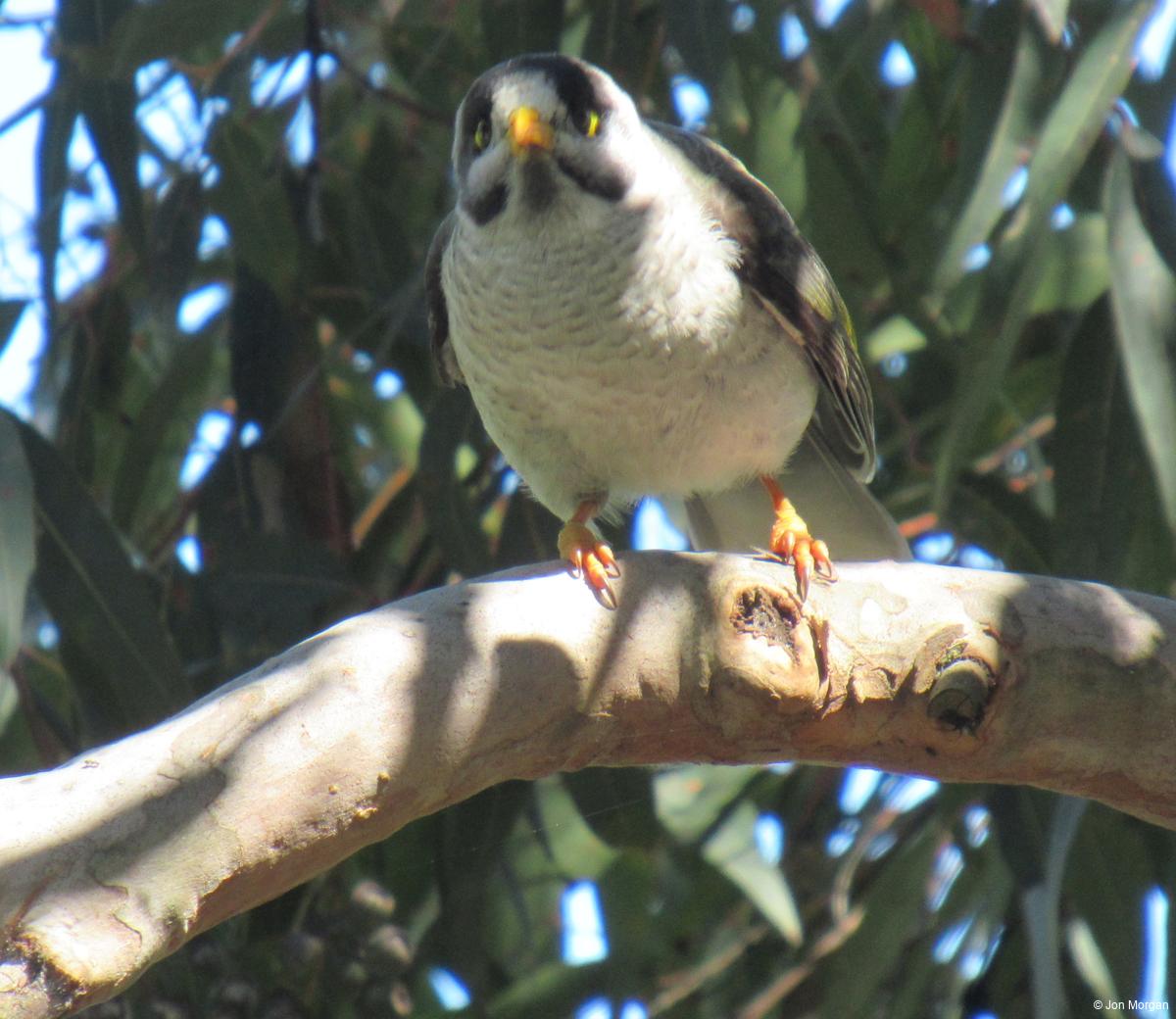
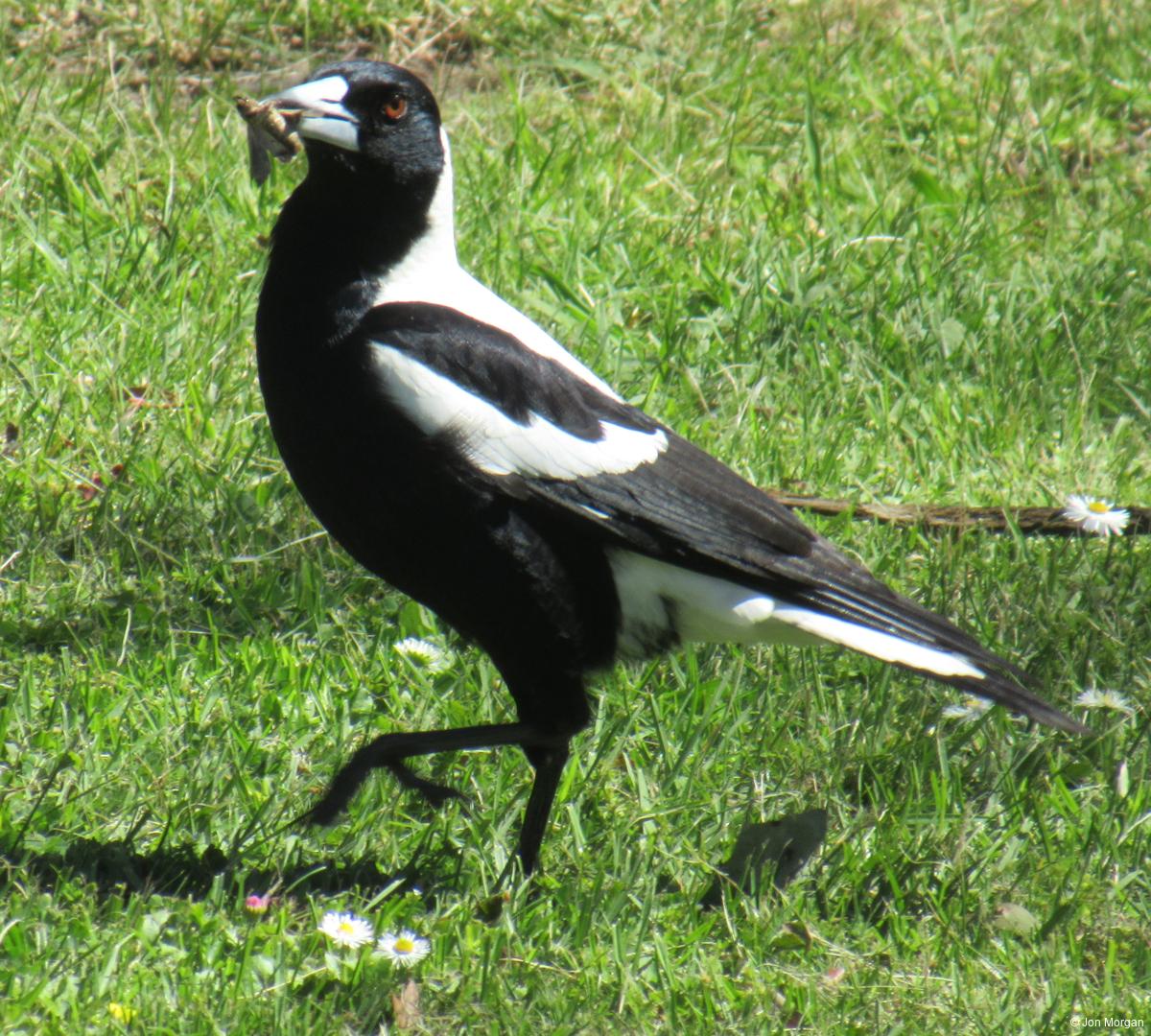
I passed through the territory and continued walking, then on my way back looked in on the territory again. That’s when it got really interesting. Firstly, I noticed a magpie on the boundary of the noisy miner territory. It seemed to be sidling along, trying not to be noticed. Then it caught a butterfly, and went into the territory, moving fast as if knowing it was trespassing:
The noisy miner parent was watching the magpie, and watching me, but not taking any action. Then came urgent calls from other noisy miners, and both noisy miner and magpie went to join in.
What had happened? A ring-tail possum had turned up in daylight:
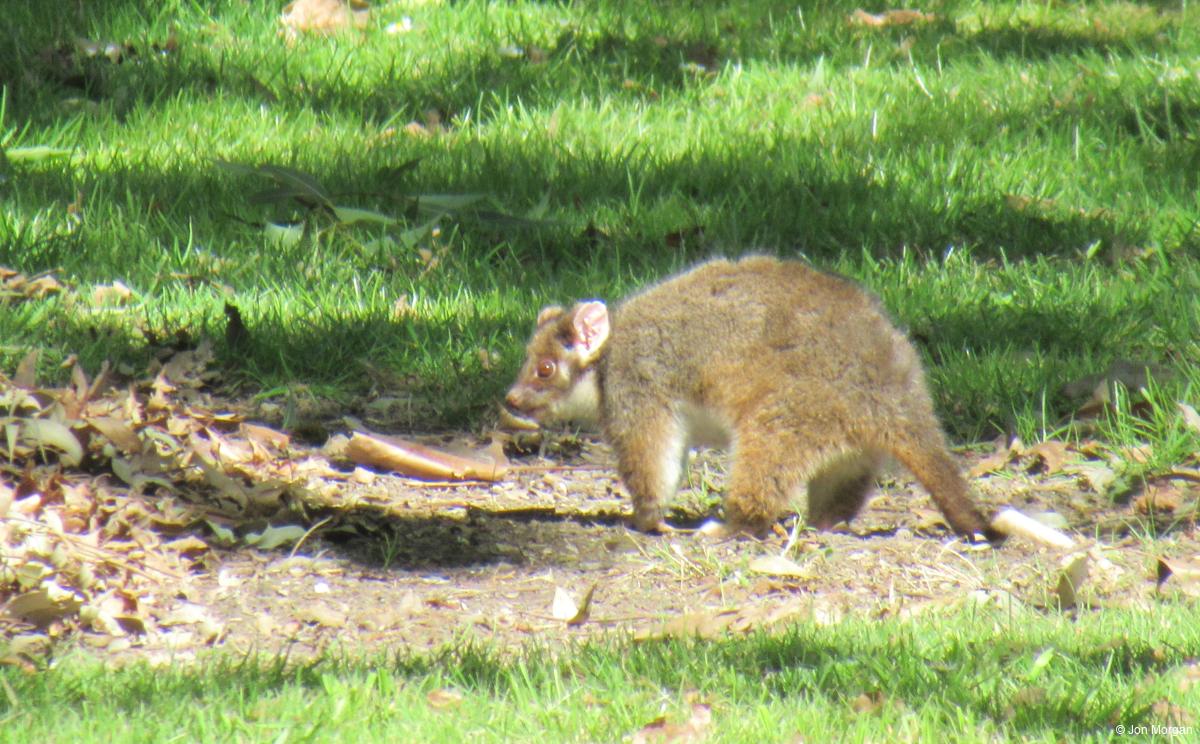
It’s not normal for them to be out in daylight, sot looked rather confused - and even more so when both magpies and noisy miners were dive bombing it.
Unfortunately, this is the best shot I could get:
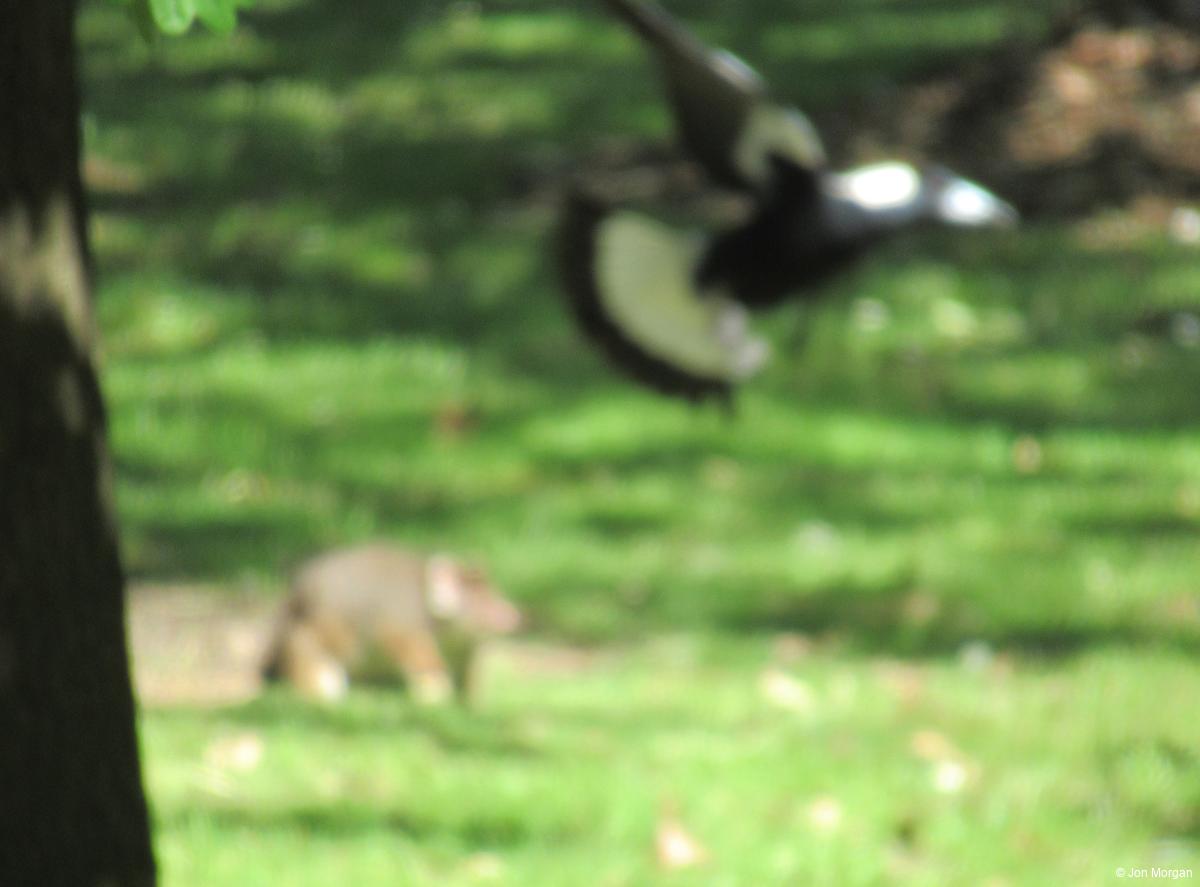
I thought I was getting a great 15 seconds of video, with magpies striking the possum multiple times. Then I looked down at my camera and realised it hadn’t started recording. Oh well - at least the image gives an idea of what was happening.
And apparently I’m not as threatening as a possum - so that’s good to know.
Another butcherbird
I’ve been targeted by a few butcherbirds this season, and each time, the first I’ve known about it has been the bird hitting my hat brim from behind at speed, and hitting it hard enough to cause concussion waves through the ear. They’ve mostly been drive by attacks, not a sustained “you’re in our territory and we don’t like it”.
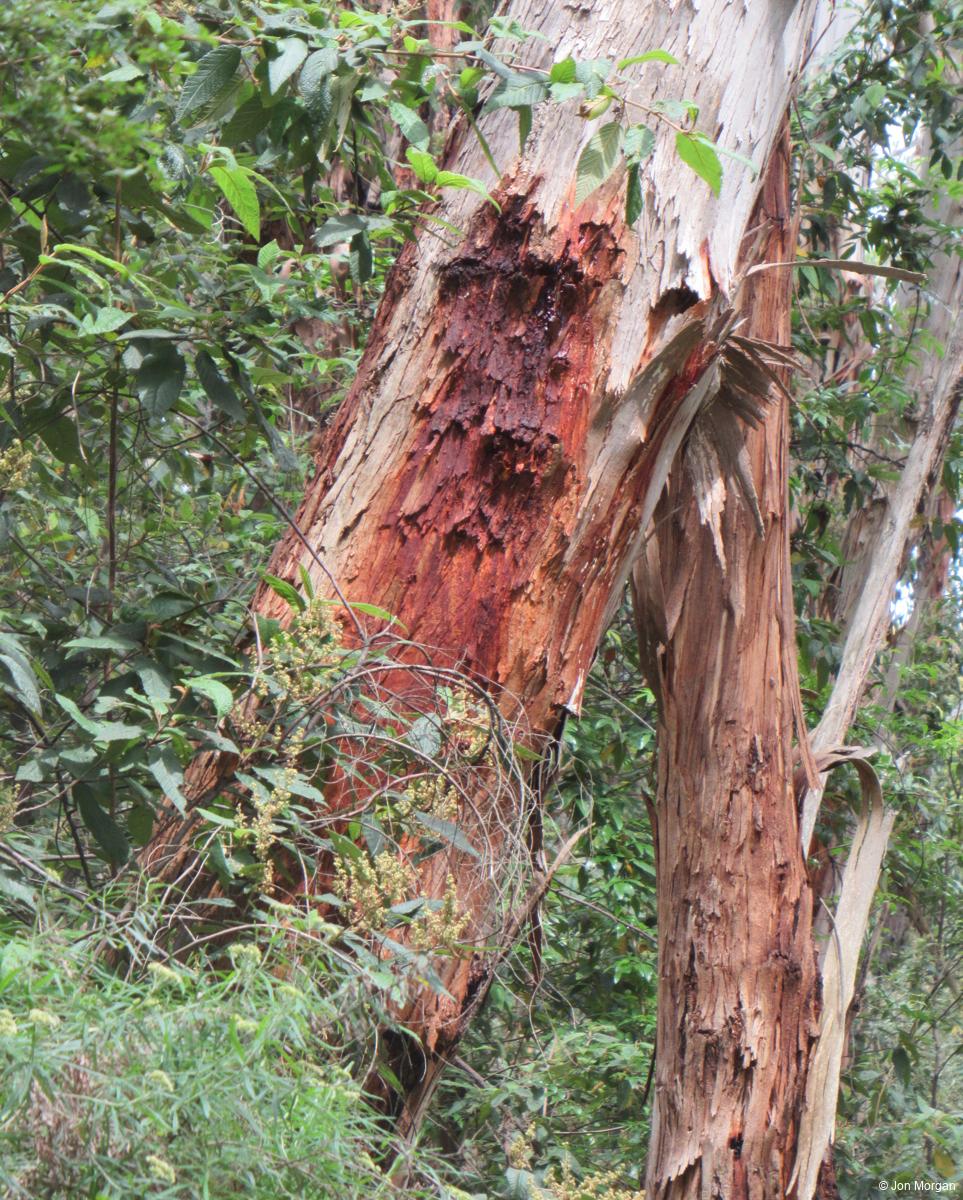
Last week, it happened again. I was just being my usual self and going on a lunchtime walk. There was a tree with an interesting pattern by the side of the trail:
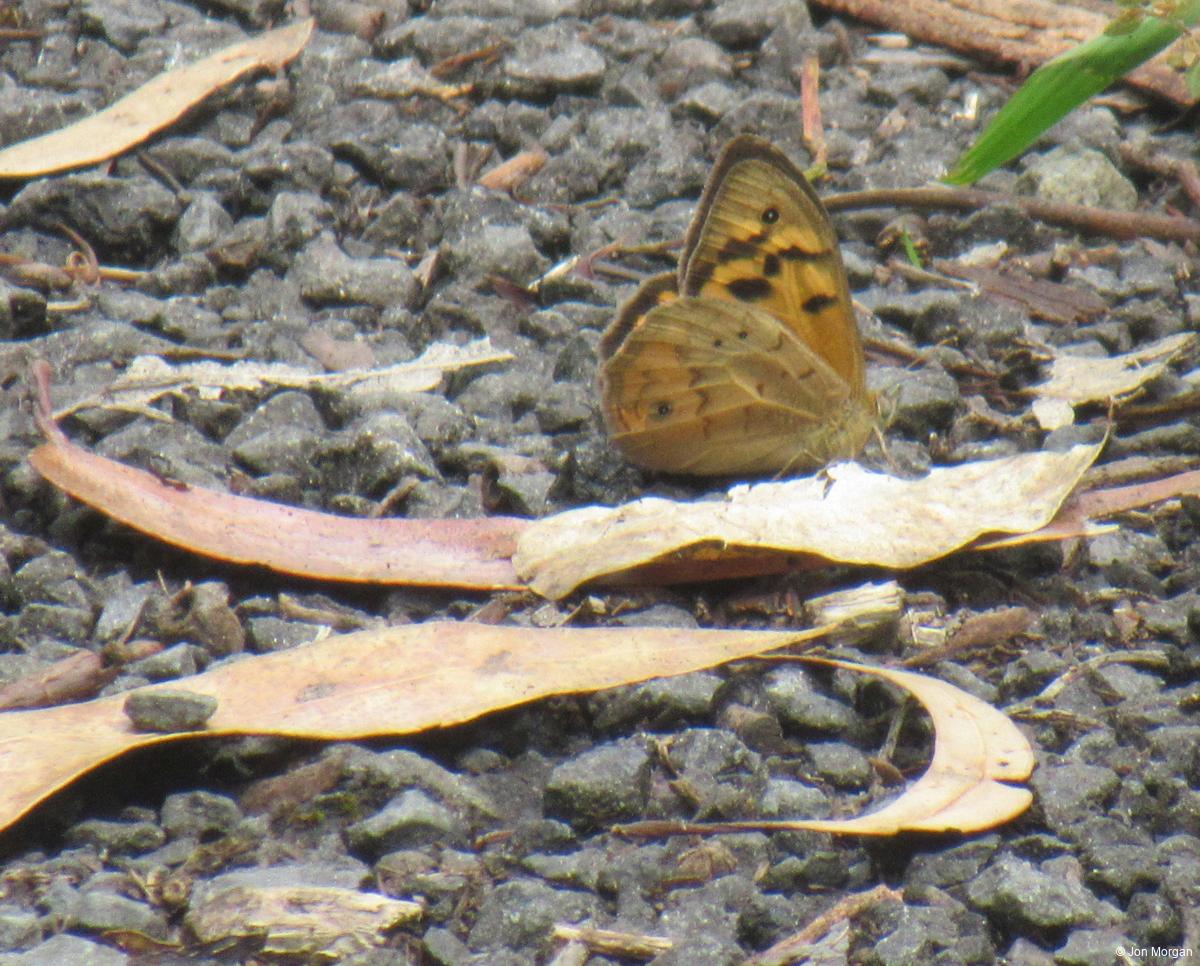
A butterfly settling on the ground:
And then there was a bird striking the side of my hat, and a raucous call that I felt I should know, but couldn’t quite place. I looked round for a bit and eventually found the attacker:
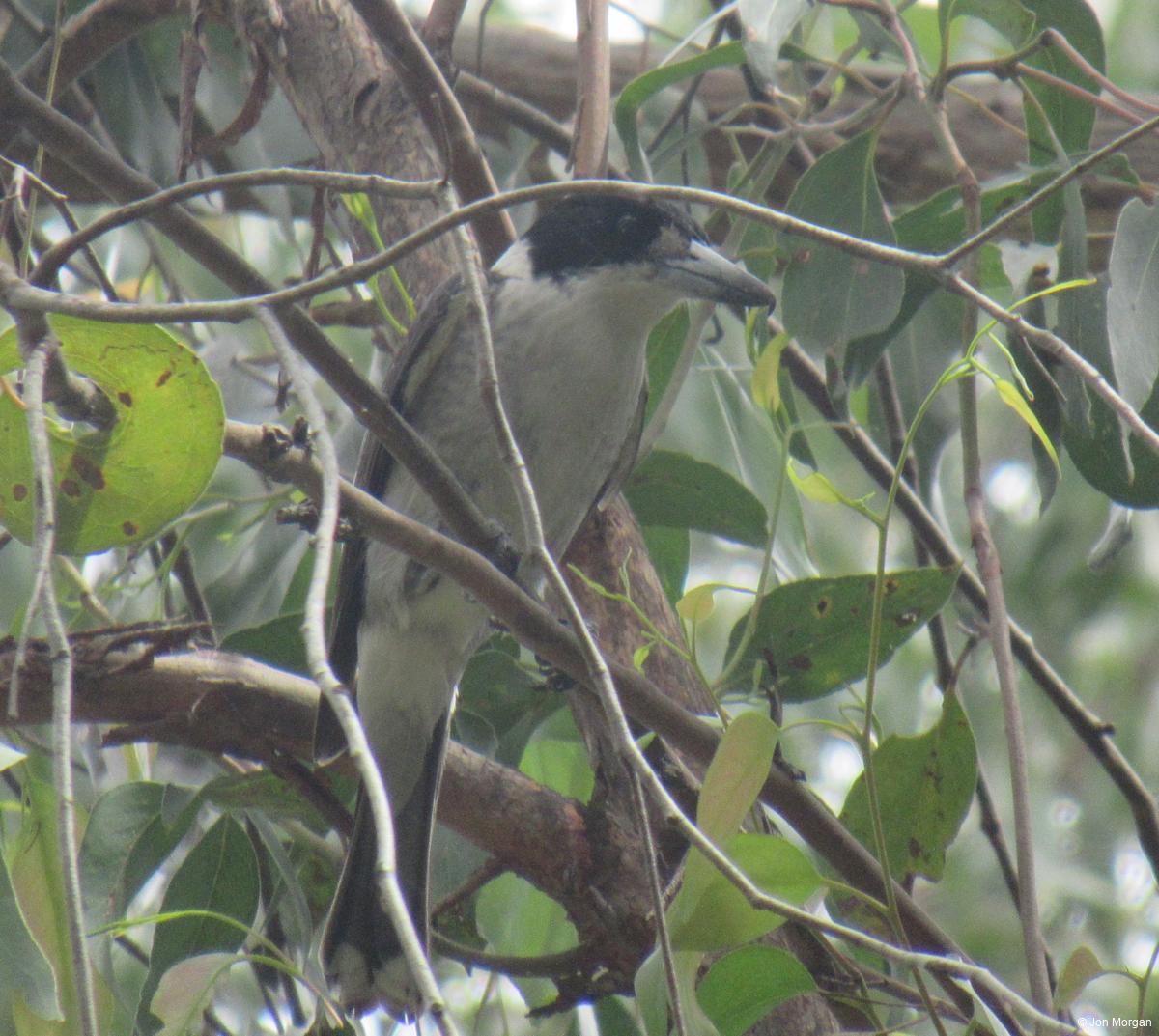
It was then that I realised why the call should have felt familiar. Does that look like the kind of bird who’s just made a sneak attack from behind? Because I assure you it had…
Unlike the other drive-by attacks this season, this one stuck around watching me, and dived at me again when I didn’t move on quickly enough.
I do like butcherbirds - like magpies, they’re pretty birds and sing beautifully - but without doubt they’re the ones most likely to take exception to me photographing them or even pausing while walking through their territory.
The kookaburra that felt left out
So, it was on a Thursday that I was attacked by a butcherbird, and I started writing this post the Friday evening. Saturday I went out walking in Lysterfield, and clearly there was a kookaburra that felt left out:
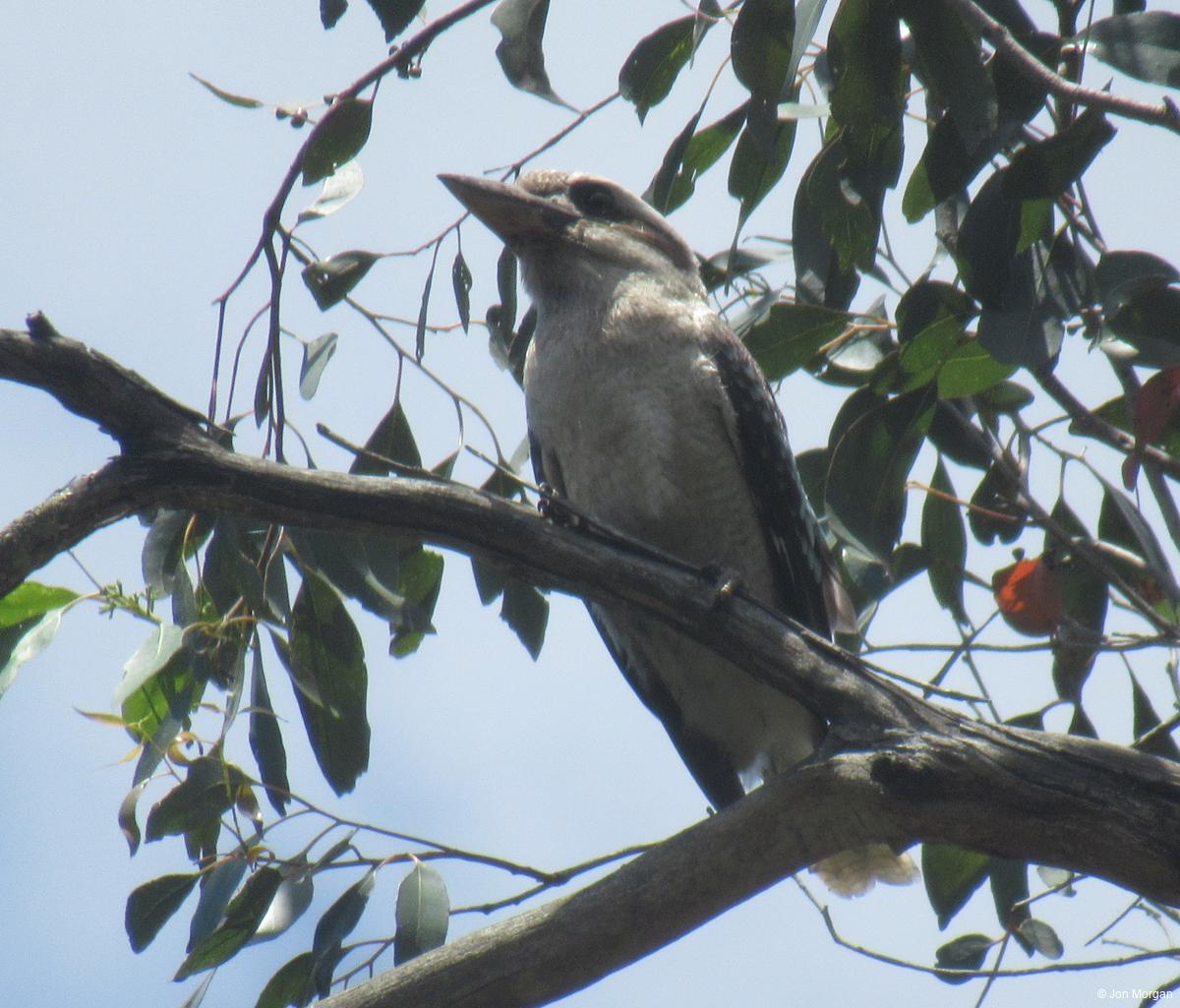
The first I knew of it was similar to the butcherbird - an attack from behind and a loud, maniacal cackle. Before that point I’d known intellectually that the kookaburra’s laugh is a territorial call, but hearing it close up from a swooping kookaburra is the first time it’s felt territorial (and threatening).
I’ve seen kookaburras diving to steal food from unwary tourists, of course. But I don’t think I’ve ever seen or even heard of them diving threateningly to protect their territory (looking it up later, it sounds like it’s rare - but not unheard of).
When it first happened it was more of a shock than anything else, and I wasn’t sure if it was deliberate. Then when it circled round a few times and each time repeated the dive and the threatening laughter, it was pretty clear it meant business. Each dive started from a high branch, headed straight towards me, then pulled up maybe a metre above my head height, letting out the threatening laughter as it pulled out.
Other encounters
This year I’ve also been swooped ineffectually by both magpie-larks and welcome swallows. Like with the kookaburra, each time my first reaction is surprise. Particularly with the swallow, the bird is just so small - is it really trying to threaten me, or did it just happen to fly a bit close while chasing something else? But when the action is repeated a few times, and when I know that there are swallow nests nearby, it becomes clear that yes, they are trying to chase me off.
Conclusion
As I’ve done more photography over the last few years, and also as I’ve stopped more to watch birds, I’ve been swooped and threatened more by those birds. Some of those swoops have been quite threatening, while others have been less effective.
The guides all say you should then move out of their territory, and it’s probably good advice. But often the first sign I have that I’m actually in their territory is the initial attack, and it’s then far too interesting to watch for me to make a quick retreat.