Top 10 birds for 2025
I’ve been hiking in the Dandenong Ranges and the Greater Melbourne area for more than a decade, and in that time I’ve seen a lot of birds and animals. Last year, I decided to try and keep track of which ones I saw (and photographed) most frequently.
And so, here they are: The beautiful black and white songster, the bird I love to hate, the bird that makes me feel most at home, and another seven birds to join them.
The list
Officially, my aim was to find the top 10 birds and animals. And over the year I did see kangaroos, wallabies, echidnas and possums, as well as butterflies, dragonflies, bees, and all kinds of insects.
But it turned out that all the top 10 - and for that matter, the top 20 - were birds. Mostly native Australian birds, too:
- Magpie
- Noisy Miner
- Crimson Rosella
- Rainbow Lorikeet
- Sulphur-crested Cockatoo
- Kookaburra
- Wattlebird
- Magpie-lark
- Little Raven
- Common Myna
The caveats
At the start of the year I was taking lots of photos - as I have been for several years - but I wasn’t specifically focused on “how many species can I see in a day?” Then sometime in April I started uploading photos to iNaturalist, and that got me trying to up my species count. But it wasn’t till late May that I officially decided I was going to keep track of the most commonly encountered birds and animals. There are probably some birds I saw frequently in the first few months of the year but rarely bothered to photograph.
I also spent three months in Europe, where - surprisingly enough - I didn’t tend to see Australian animals. Even when in Australia I didn’t always get to classifying my photos, particularly on weekends where I tend to take many more photos.
All that together means I only have stats from 217 days of a possible 365, and quite a few of those would have been before I was explicitly trying to get photos of every bird and animal I saw. So the results make for an interesting insight and a topic for a blog post - but if I keep it up for the rest of this year I might get more reliable results.
Finally, I’m counting the number of days in which I saw a particular animal, not the total number seen. So it wouldn’t matter if I saw a hundred cockatoos in a day - and I’m sure some days I did - it still only counted as one cockatoo sighting for the day.
What does it take to be a winner?
At the top of the list, I saw magpies on 111 of those 217 days (just beating out noisy miners on 110), while I saw mynas on only 49 of the days. So I needed to see an animal more than one day in five to be in the top ten. To be top, I needed to see it more than half the time. And so there were plenty of birds that I saw maybe once a week, and they still felt like common birds - just not top 10 material.
I can roughly split my days into three different types:
- Office days: I’m working in the office. This means the birds and animals I’ll see will be those of the inner suburbs - though I may also see Dandenong Ranges animals walking to/from the station here.
- Work From Home days: I’m working at home. This means I’m likely to be walking at lunchtime or after work near home, and I’m also more likely to see the birds and animals of the Dandenong Ranges.
- Weekend days and holidays: Since I don’t have any work, I tend to go on longer walks and take a lot more photos. It can include walking in the Dandenong Ranges, or by the Bay, or visiting the CBD, or in a variety of other parks around Greater Melbourne. I wasn’t completely sure what types of birds would be common on weekends.
Originally I’d thought the contest would be between noisy miners and crimson rosellas. Crimson rosellas are very clearly Dandenong Ranges birds, so I expected them to lead on WFH days. Office days I expected noisy miners to be leading. Weekends I really wasn’t sure about. But I soon found I was much more likely to see noisy miners near home (there are still plenty in the Dandenong Ranges) than crimson rosellas on an office day (I’d have to see them on my way to the station).
Finally, I realised it was going to be a three way contest. I kept seeing magpies too - near the office, near home, and pretty much everywhere else as well. In fact, it was reasonably common on office days for me to have seen all three before 9AM, in which case I could call the contest a draw and move on to the next day…
And so the final front runners were:
-
Office days: Noisy miners were top, followed by rainbow lorikeets. Magpies were third, and crimson rosellas were a distant seventh.
-
WFH days: Crimson rosellas were top, followed by magpies, then noisy miners.
-
Weekends: It was a close three way contest, but magpies just beat out noisy miners and crimson rosellas.
So it looks like the magpie’s tight victory was based on weekends and WFH days. Perhaps if I’d had better stats for weekends, that would have meant a clearer magpie victory - or perhaps noisy miners would have found a way to end up on top.
Right now, though, it doesn’t matter: Magpies are officially my 2025 winner. They’re also in the lead so far in 2026.
Of course, weekend stats aren’t the only thing that made a difference. If I’d had stats from Europe a couple of species might have benefited. In particular, I saw rock pigeons in Singapore, Qatar, and across Europe. It wouldn’t have been enough to reach the top, but it probably would have been enough to land them in the top 10.
Getting emotionally involved
As it started, this was meant to be an objective project. I was curious which birds and animals I saw most, and focusing on photos gave me an easy way to measure that. I certainly wasn’t meant to be playing favourites.
However, the reality was that I particularly wanted crimson rosellas to win, and I particularly didn’t want noisy miners to win (ah well - one out of two’s not bad…).
What that meant was that I could get excited when crimson rosellas turned up (and try hard to get pictures of them), then get disappointed when noisy miners inevitably showed up. I never specifically excluded noisy miners, but I was less likely to take distant shots of them or to try and find them if they evaded me.
How did this quest change your photography?
When I saw birds or animals, I was more likely to take establishing shots first - distant shots to prove that I’d seen those animals. Only when I had a secured would I then try and take closer / better shots. It didn’t matter that the animal wasn’t looking particularly scenic or acting in a particularly interesting manner - just that I captured it.
This is actually something I’ve always done for animals that are a serious flight risk - wallabies, for example. It just became more important when I was using the photos for something other than looking pretty.
When out walking, I was also much more likely to be listening to bird calls and then trying to find any birds I heard. (Pro tip: Don’t walk near a major road, since it interferes with your auditory awareness - as can a flock of cockatoos at sunset 😛).
Finally, I found that I was much more likely to visit lakes and rivers in search of more variety. As a result, I was surprised that no ducks or other waterbirds ended up in the top 10. I think what that shows is that those birds felt important to me because I’d gone out of my way to find them - but they were still beaten by birds I saw in day to day life without specifically having to go look for them.
The photo gallery
Back in January I had grand plans for this post. Each of the top 10 birds would have lengthy descriptions and a variety of photos. I’d also write about (and share photos of) some of the birds’ less common relatives.
Given we’re now a quarter of the way through the year, I think it’s fair to say that particular goal hasn’t been achieved. So it’s time to scale back.
Each bird will get a brief description, and one representative photo to give a feel for what the bird is “normally” like. It won’t necessarily be my favourite photo of that bird from 2025, but hey, at least it will be published.
Introducing our winner: The mighty magpie
If magpies are known for anything, it’s probably their fierce protectiveness of their nests in the nesting season. In spite of that reputation, I don’t think I’ve ever had one swoop me - and certainly not in 2025.
So what’s the deal with magpies? They’re not the most colourful, but they’re around everywhere, they can be inquisitive, and they sing beautifully. Perhaps they sometimes give me side eye when I’m taking yet another photo of them, but I like having them round.
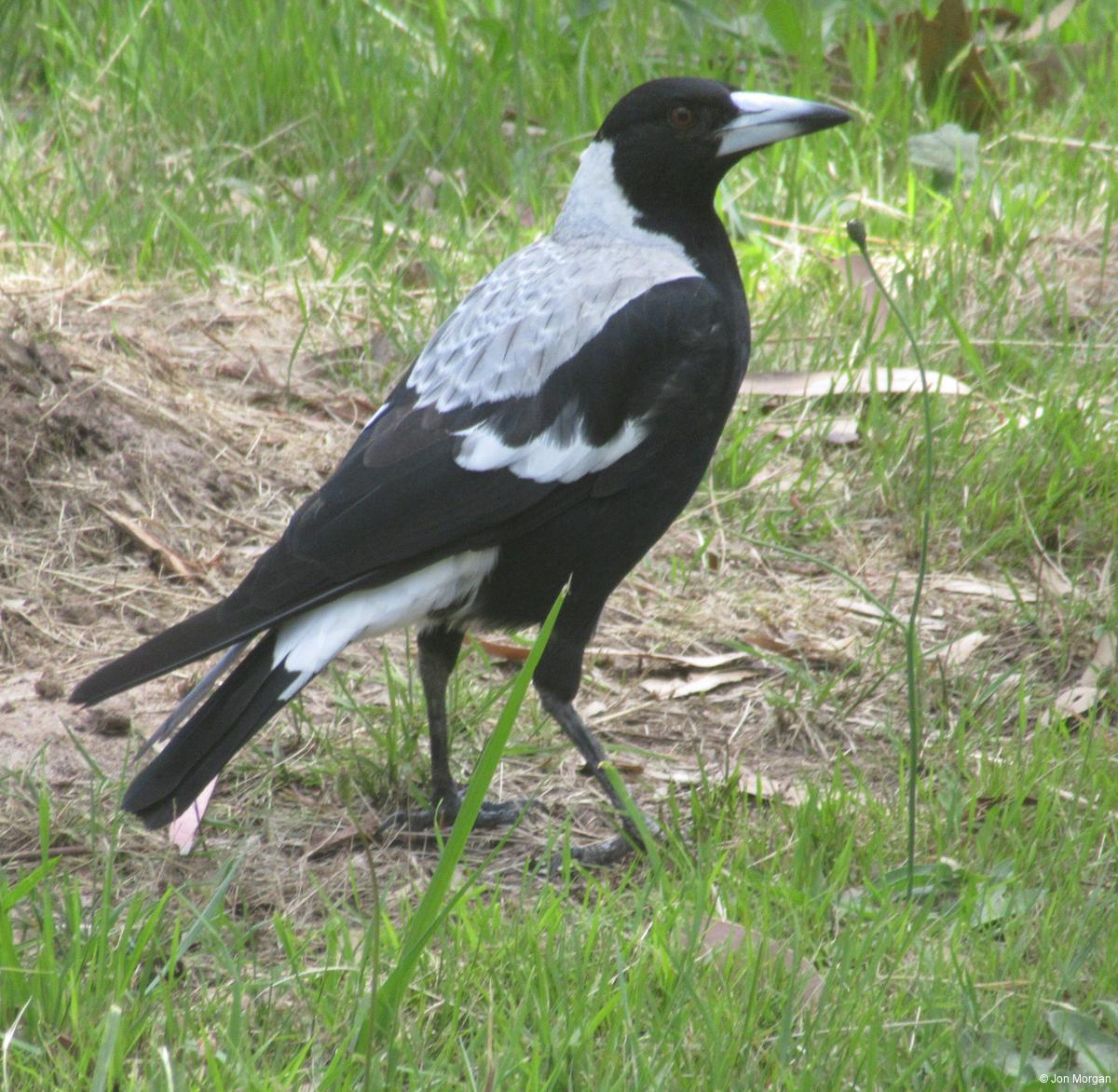
Note: Australian magpies are a completely different species from the European and North American magpies. I did also see a few of those in Switzerland last year - but not enough to make it into the top 10…
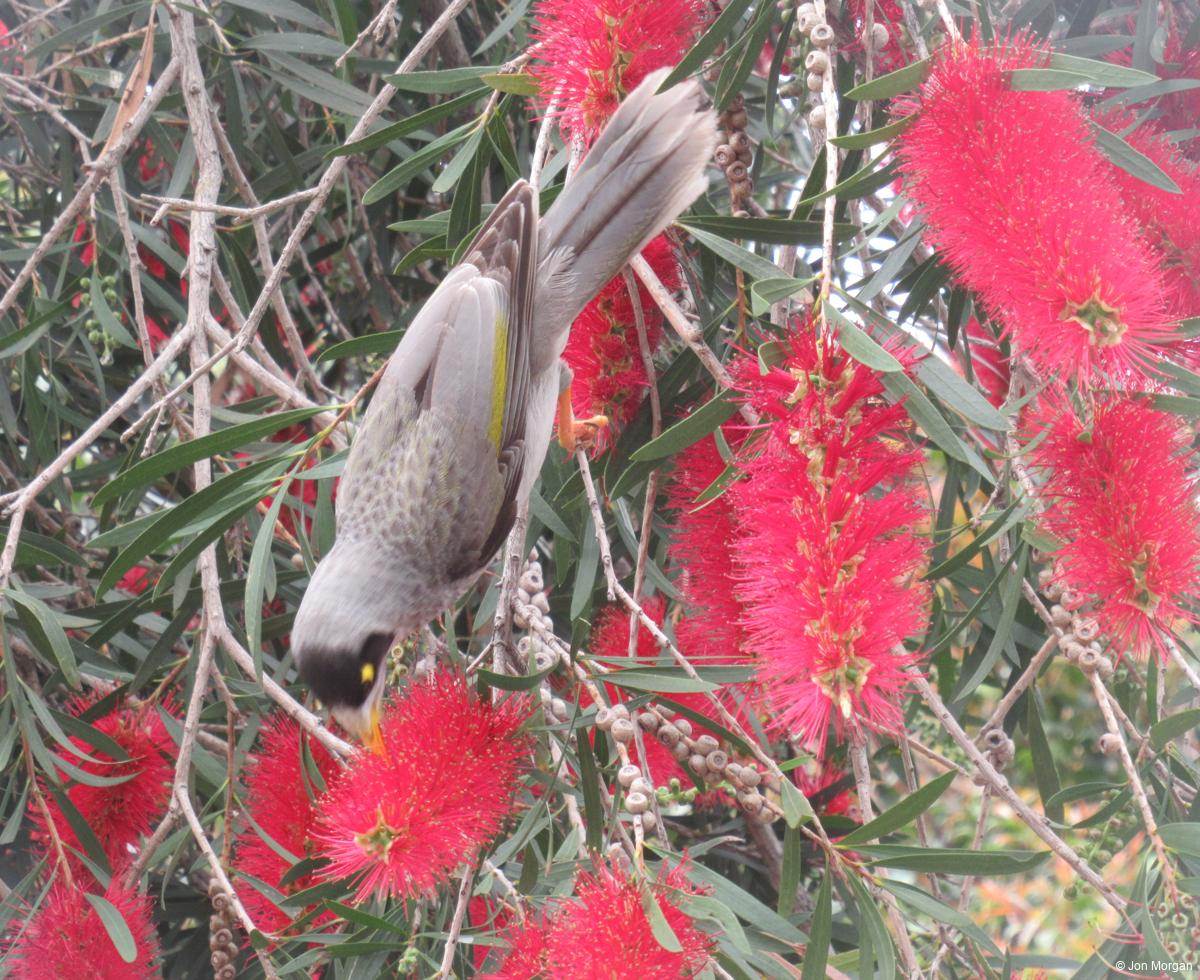
Number 2: Noisy miner
Noisy miners are the bird I love to hate. I think they can be pretty, but not nearly so much as most of the other birds. They’re constantly vocalising, particularly juveniles. Apparently early on names like “garrulous honeyeater” and “chattering honeyeater” were used, and those names ring true to me. So does “noisy”.
They’re also associated with reduced biodiversity, and they’re the biggest bully around. Sometimes they just land in a significant manner near a bird they want to drive away, then sneak along a branch towards it. Other times they whistle up the troops - call and a bunch of noisies come from afar and surround the enemy bird.
If their target ignores them, they’ll often stand down pretty quickly. But if the target flies off they’ll immediately be on its tail, chasing it down and pecking mercilessly.
It doesn’t matter if the bird is larger than them - magpies, currawongs, and little ravens are all fair game, and I even have photos of a few noisies attacking a black-shouldered kite. That one must have been around five times the size of its attackers, and looked more bemused than anything else. It’s not even just birds, either - I remember one time last year when i saw a couple of noisies chasing and swooping in on a puppy. It really didn’t know how to respond to that, and neither did its owner…
These kind of attacks can certainly make for interesting photos. But they can also drive off newly landed birds I’m trying to take a picture of - for example, an eastern rosella or a rainbow lorikeet. How inconsiderate can you get?
Number 3: Crimson rosella
Crimson rosellas are the bird that most means “home” to me. Why, you ask? Well, they’re not nearly as urbanised as the other birds on this list, so I didn’t see them much until I moved to the Dandenong Ranges more than a decade ago. Now I see them fairly frequently, and so they’ve come to represent my chosen home. That’s why I wanted them to come out on top.
I’ve also seen them further abroad, in places like the Grampians and the Australian Alps - just in places that I’d call “eucalypt forest”, not “suburbia”.
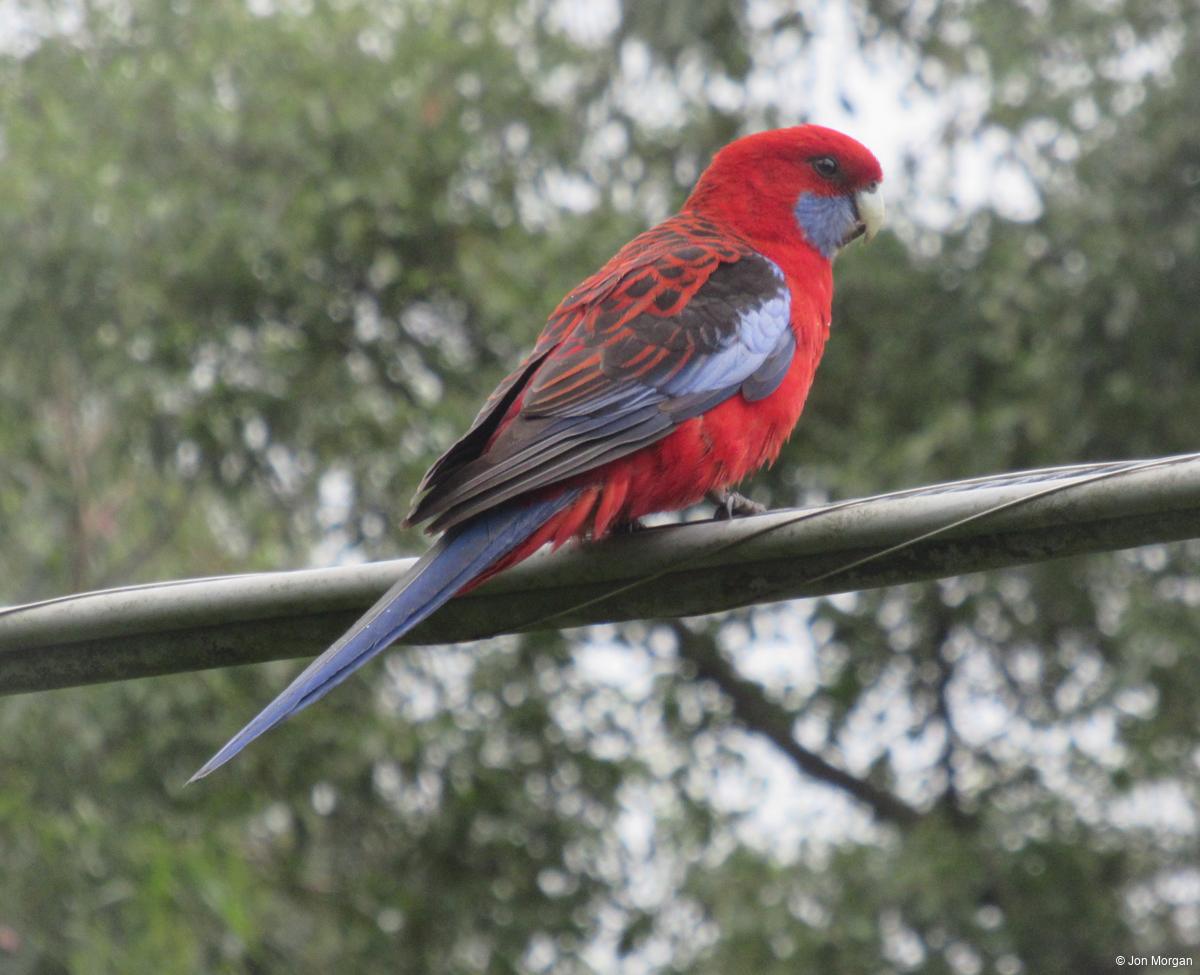
If you’re in the area, also look out for the juveniles. They’re very green with a lot less red, and can often be seen hanging round with adult rosellas that are presumably their parents.
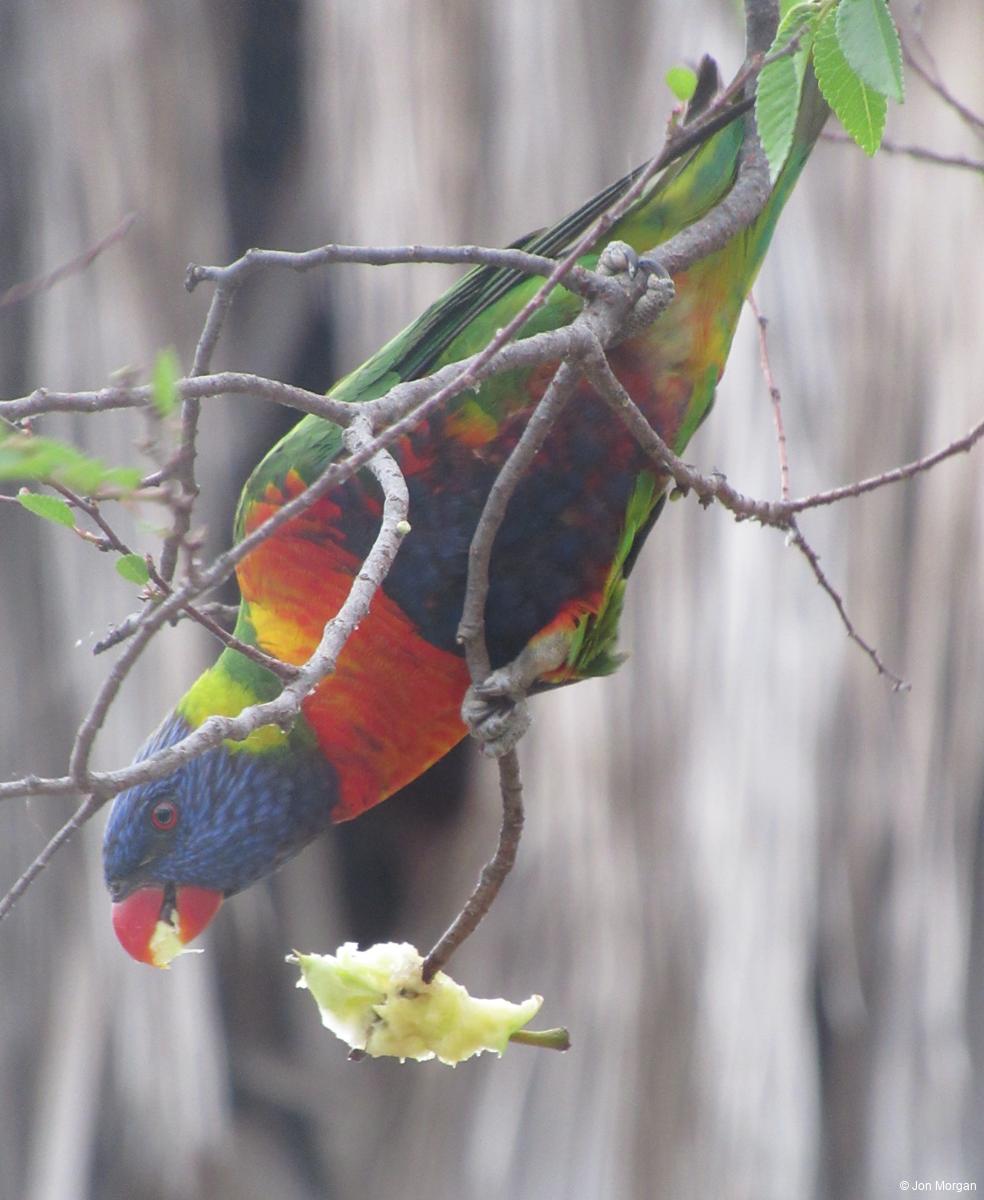
Number 4: Rainbow lorikeet
This has to be one of our most photogenic birds. Colourful, sometimes noisy, and often to be found anywhere there’s nectar or fruit to be had.
Number 5: Sulphur-crested cockatoo
At sunset I can sometimes see (and hear!) hundreds of these cockatoos massing to roost in trees near me. They’re noisy birds that feel like showmen.
Seen at rest they can be deceptively plain white with just a splash of yellow, but if you see one with crest and wings extended squawking, you’ll know about it:
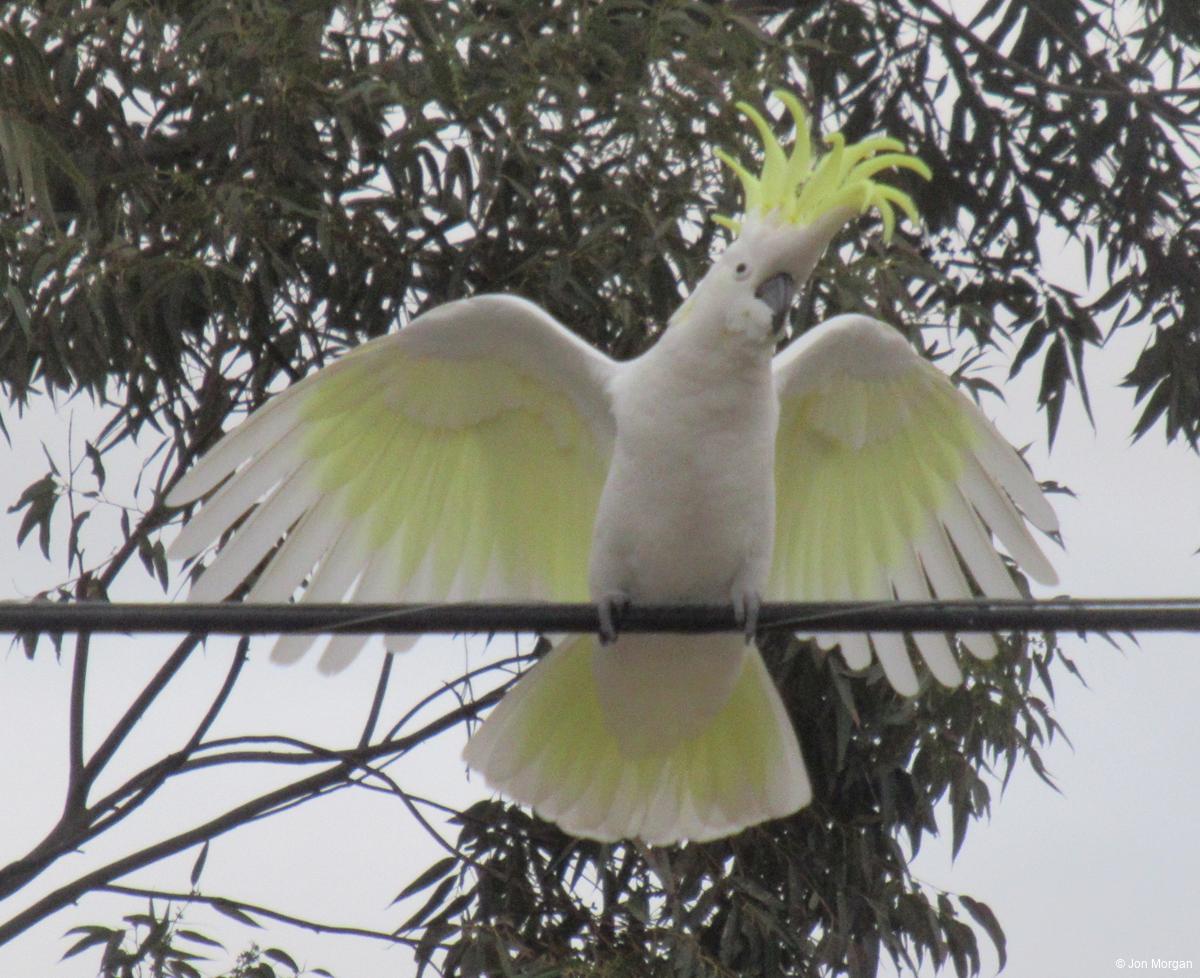
The yellow under their wings can also be seen clearly when they’re in flight.
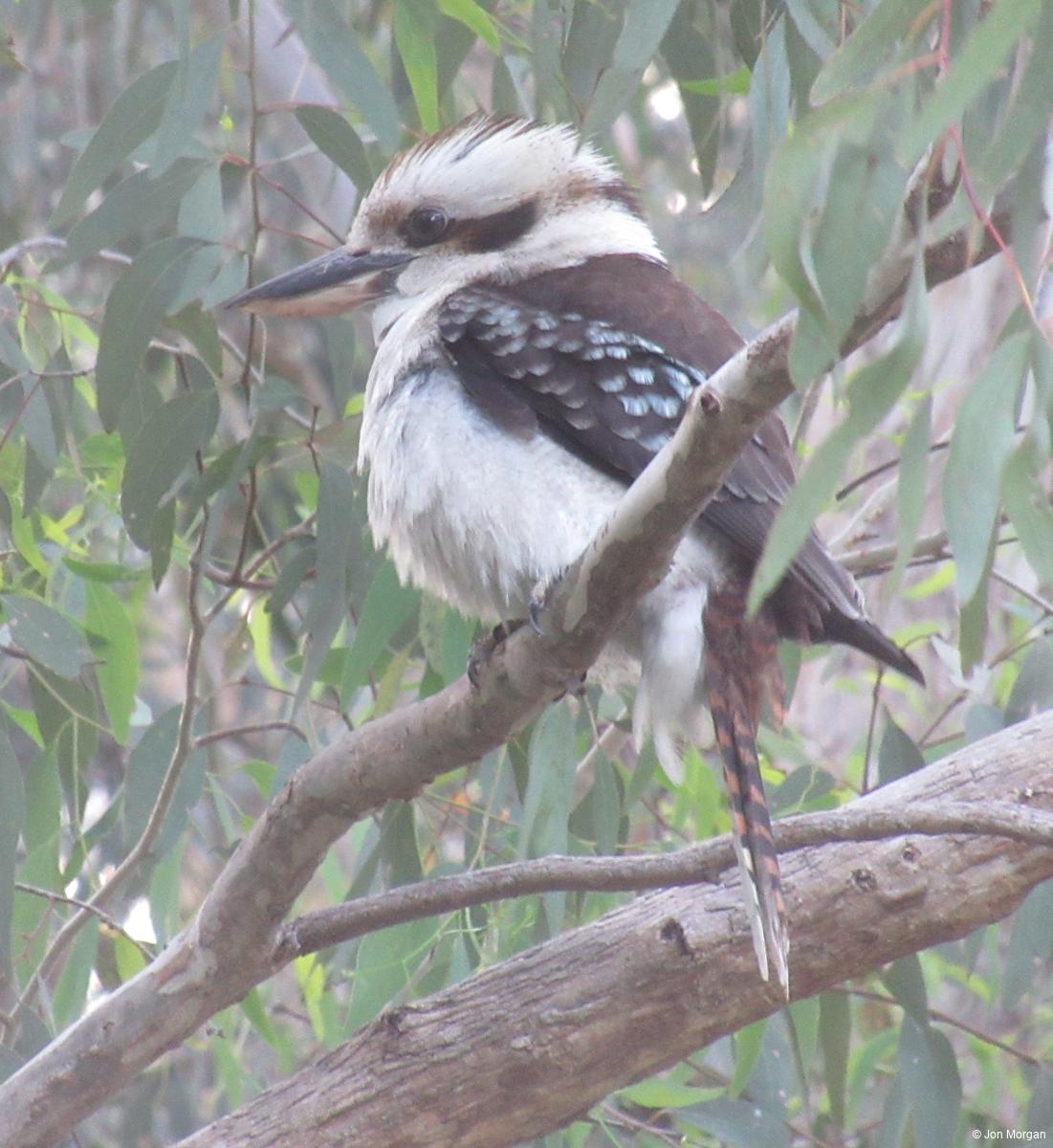
Number 6: Laughing kookaburra
One of Australia’s better known birds, I think, the characteristic laugh is actually a territorial call. They’re another bird that frequents the Dandenong Ranges, and sometimes I hear groups of them laughing together at sunrise or sunset.
They’re also known for stealing food, so if one is eyeing your food, keep an eye on it…
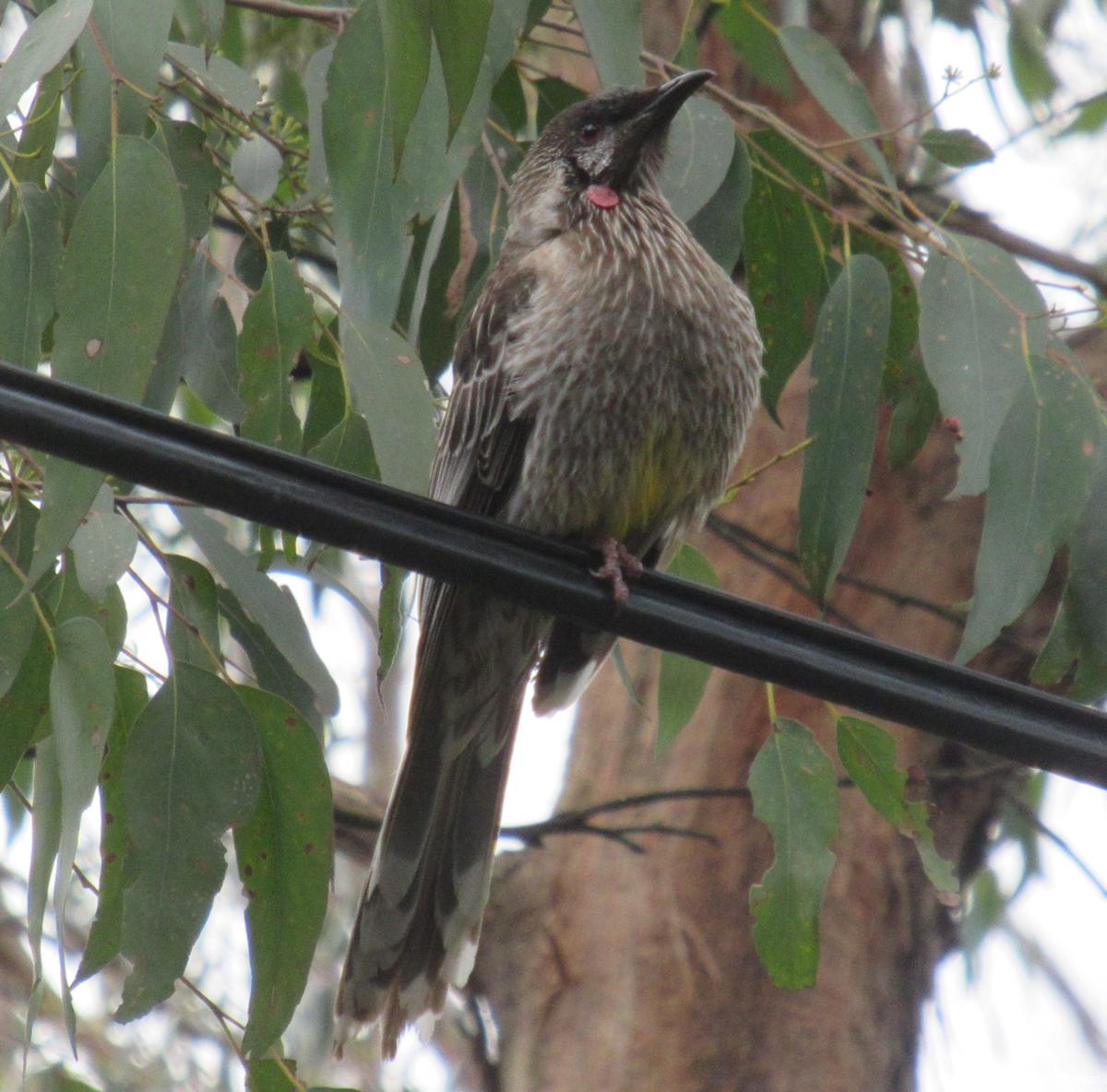
Number 7: Red Wattlebird
These birds can drive others away from food sources in just the same way as noisy miners do, but I don’t think it’s as common for them to band up or to whistle up supporting troops.
If you’re wondering why they’re called wattlebirds, look at the red on the neck. That’s the wattle:
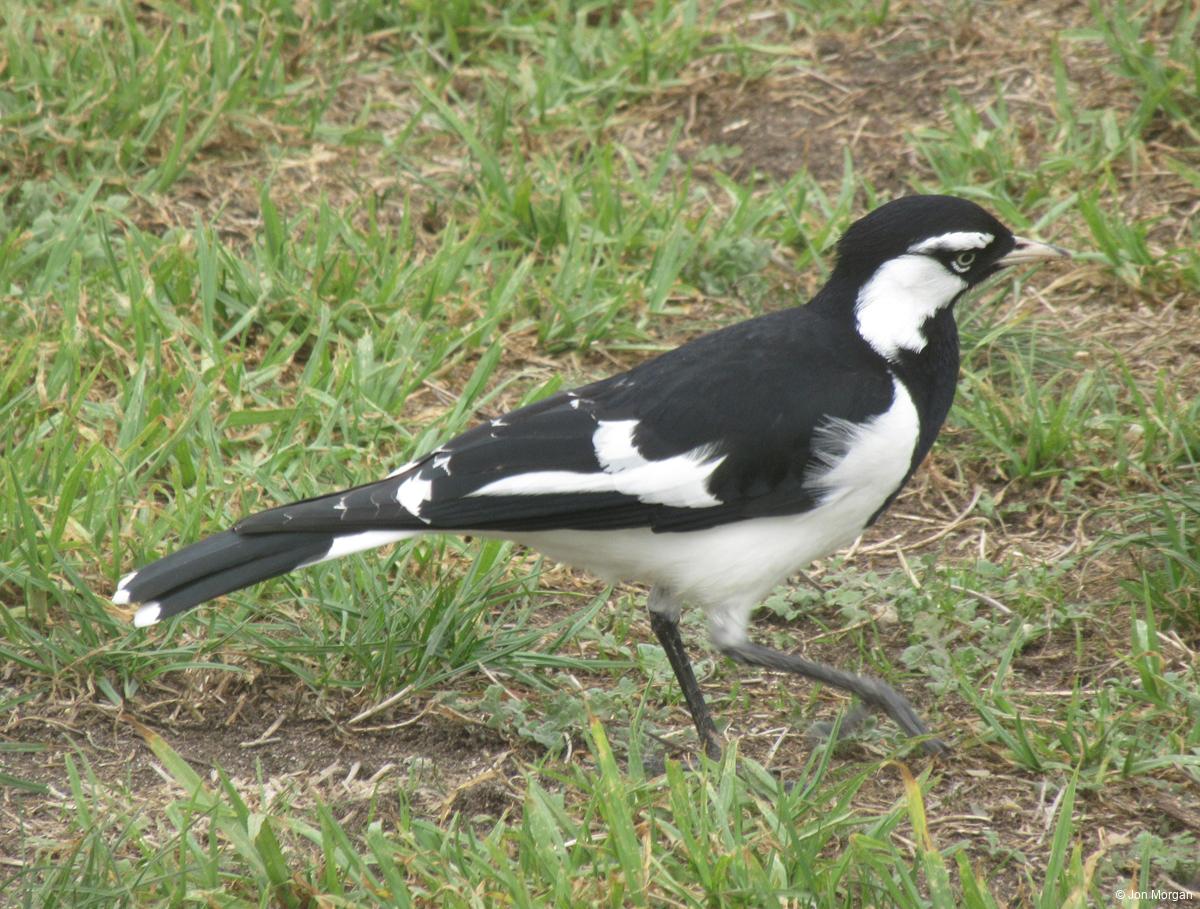
Number 8: Magpie-lark
No, this isn’t another type of magpie, but it is a frequently seen black and white bird, so I guess that’s why they reused the “magpie” label (we also have a flock of magpie geese to the west of Melbourne, though they’re not nearly as common).
They don’t behave at all like magpies - instead, they strut round looking like they own the place (spoiler: they don’t).
Number 9: Little raven
This is our particular “big black urban bird with an ominous call”, so I had to pick a photo to match:
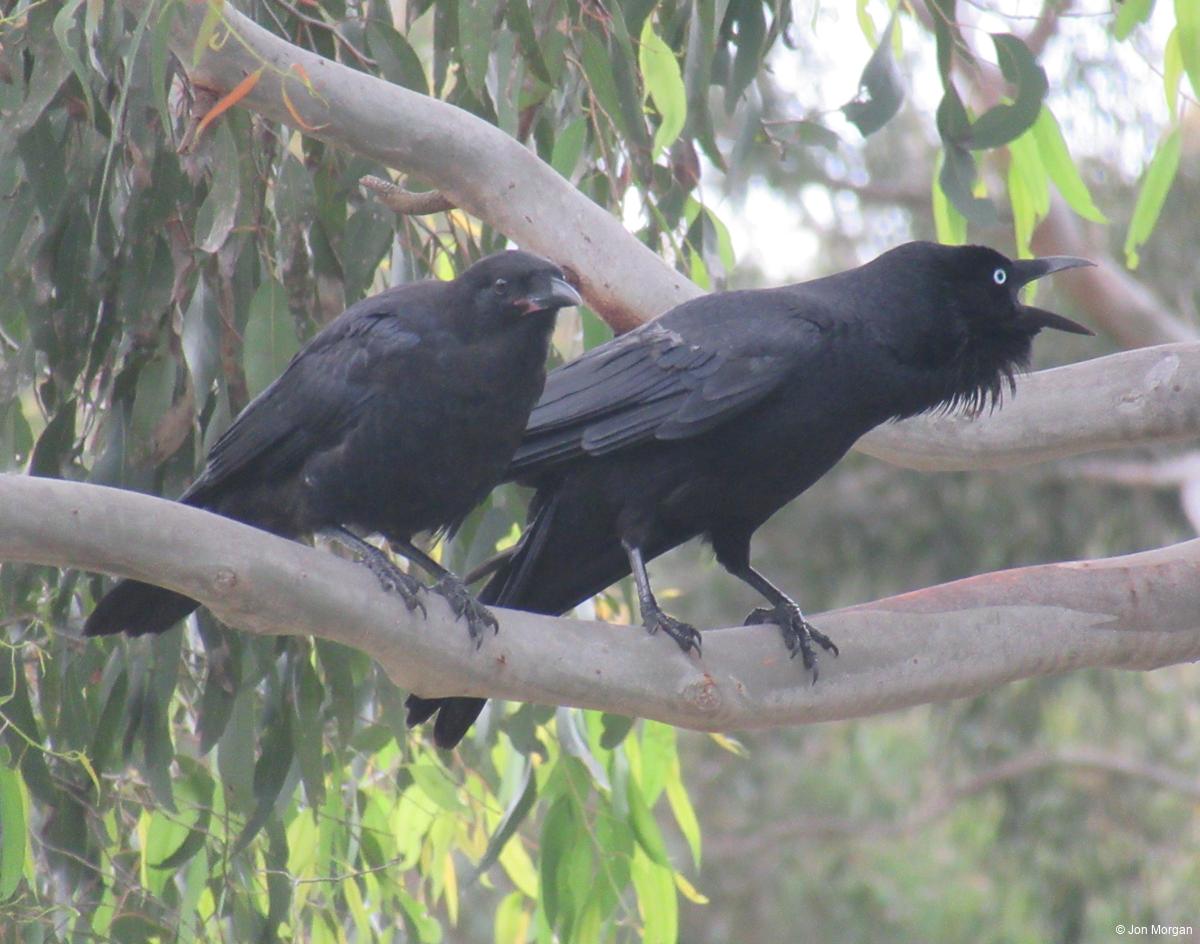
I always used to call this bird a crow, but one of the many things I discovered from iNaturalist was that it’s actually a raven (if you’re keeping track - that still means it’s a corvid).
Number 10: Common myna
This is the first invasive on my list, so it’s kind of fitting that the photo I picked was from Melbourne Zoo. But this particular bird wasn’t behind bars - it was at one of the picnic areas, and was busy looking disapproving at a dusky moorhen chomping on an apple core.
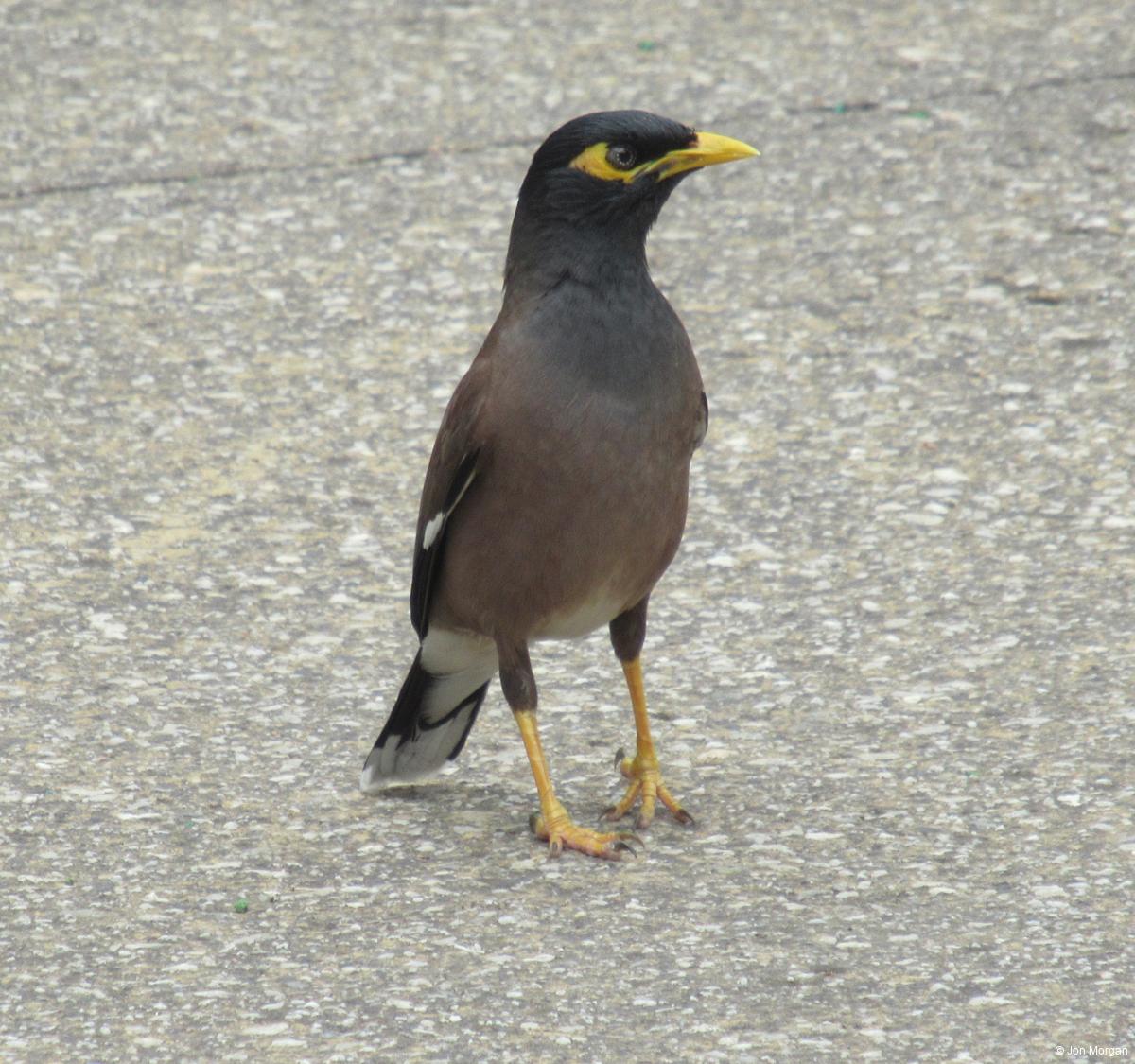
Along with rock pigeons (#12), mynas are a common sight around Melbourne.
Bonus round: Superb fairy-wren
Up until I ran the numbers I genuinely thought fairy wrens were going to be in my top 10. Then mynas beat them out, so this will have to be a bonus addition. Think of it as the tenth most common native Australian species I saw.
Like crimson rosellas, they make me think of my Dandenong Ranges home. They do have a wider range - for example, I’ve seen them by the bay and in parks in inner Melbourne. But it’s the Dandenong Ranges and similar environments east of Melbourne where I’d see them most, and I don’t think I’ve ever seen one near my workplace.
I think they’re also the only species on this list where males look significantly different from females. This one is a female:
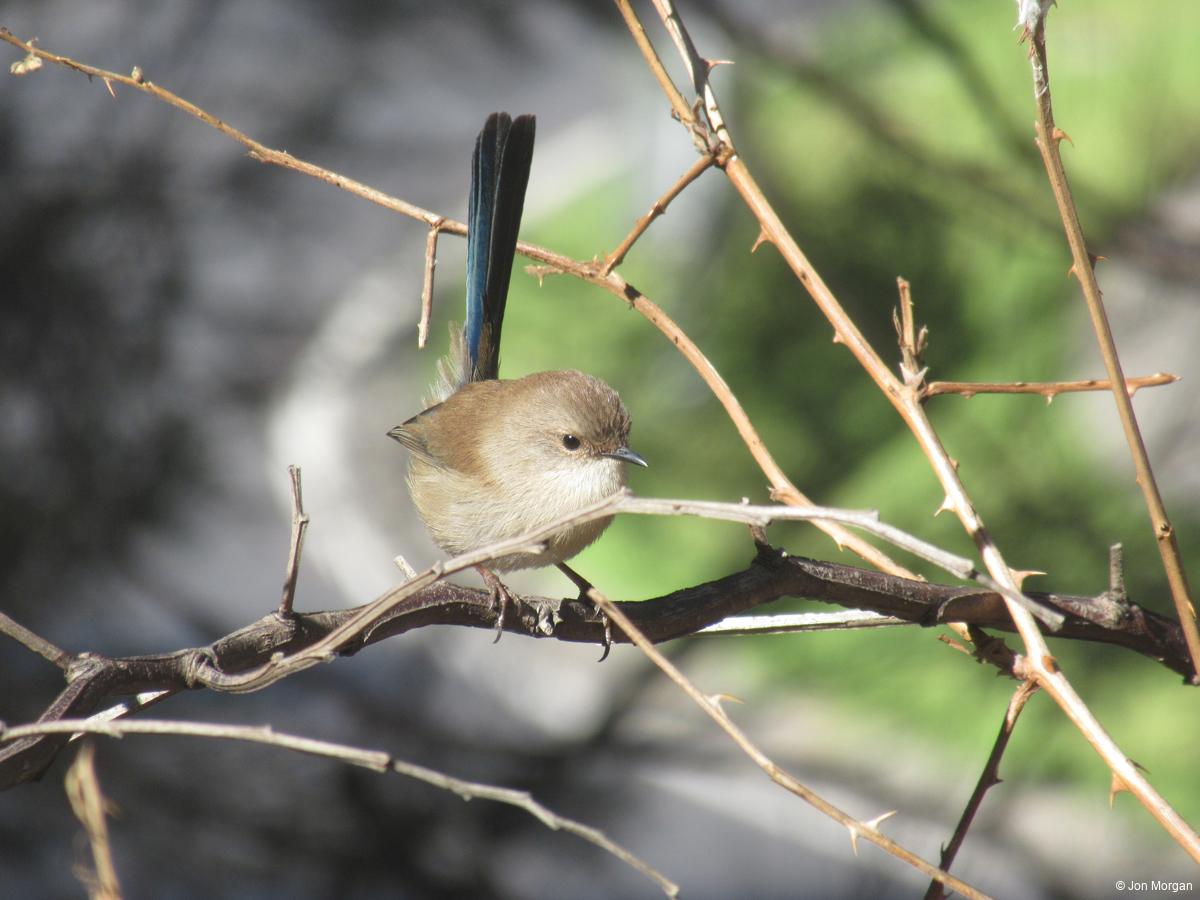
(if you want to see both together, have a look at my New Year’s post).
Conclusion
So there it is - a top 10 for 2025, with photo gallery to match.
I’ve written in the past about how I find it exciting seeing species that are rare or new to me. That’s still true.
Meeting yet another of these top 10 birds perhaps isn’t so exciting. But they’re still old friends - and some of the encounters can still surprise me 🙂.